
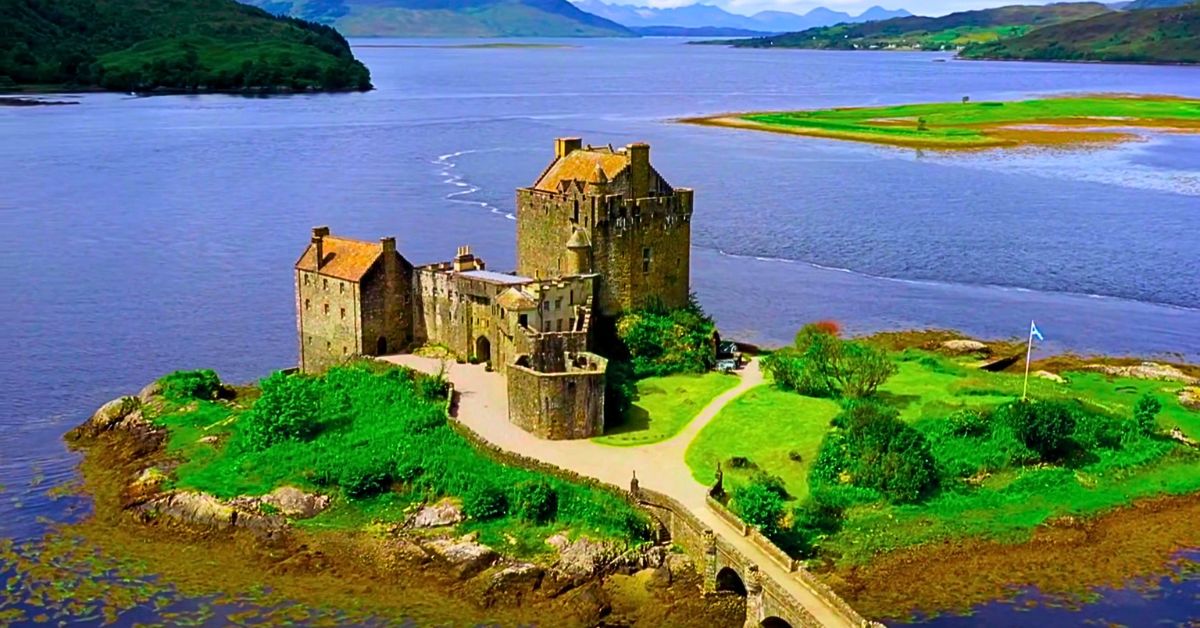
If there’s one thing Scotland does better than anywhere else on earth, it’s castles. Perched on clifftops, rising out of sea lochs, and guarding ancient city skylines. They’re everywhere you look, and every single one has a story worth hearing. With somewhere between 1,500 and 3,000 castles dotted across the country. We’ve done the hard work for you and picked the ten that truly blew us away. Whether you’re planning a road trip or just daydreaming, these are the ones to put on your list.
Edinburgh Castle
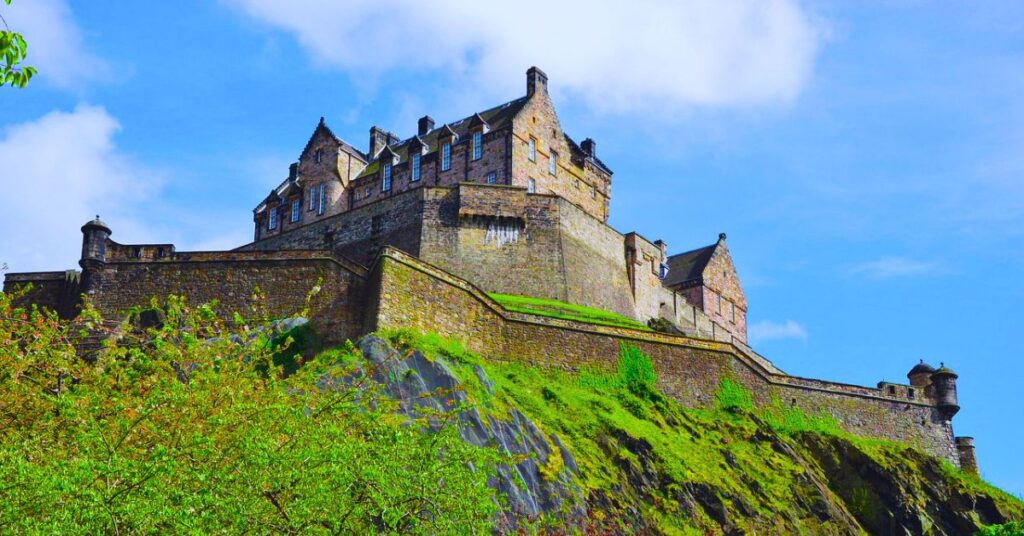
Let’s start with the big one. There’s a reason Edinburgh Castle is the most visited paid attraction in all of Scotland. Most visited attraction not just the most visited castle in Scotland!. It is the undisputed crowned jwell when it comes to castles in Scotland.
Standing on Castle Rock, an ancient volcanic plug right in the heart of the city, it commands your attention the moment you arrive. Humans have lived on this rock since at least the Iron Age. A royal castle has watched over the city from this very spot since the reign of King Malcolm III in the 11th century.
What makes it more than just a pretty fortress is everything it holds. Step inside and you’re walking through nearly a thousand years of Scottish history. You’ll come face to face with the Honours of Scotland — the oldest crown jewels in Britai. Stand next to Mons Meg, a cannon so enormous it genuinely stops you in your tracks. It was at the heart of the Wars of Scottish Independence and was still being fought over as recently as the Jacobite rising of 1745.
Pro tip: Book your tickets online in advance — the queues can be brutal in peak season. The guided tours are genuinely worth the extra time.
Castle Open year-round
Eilean Donan Castle
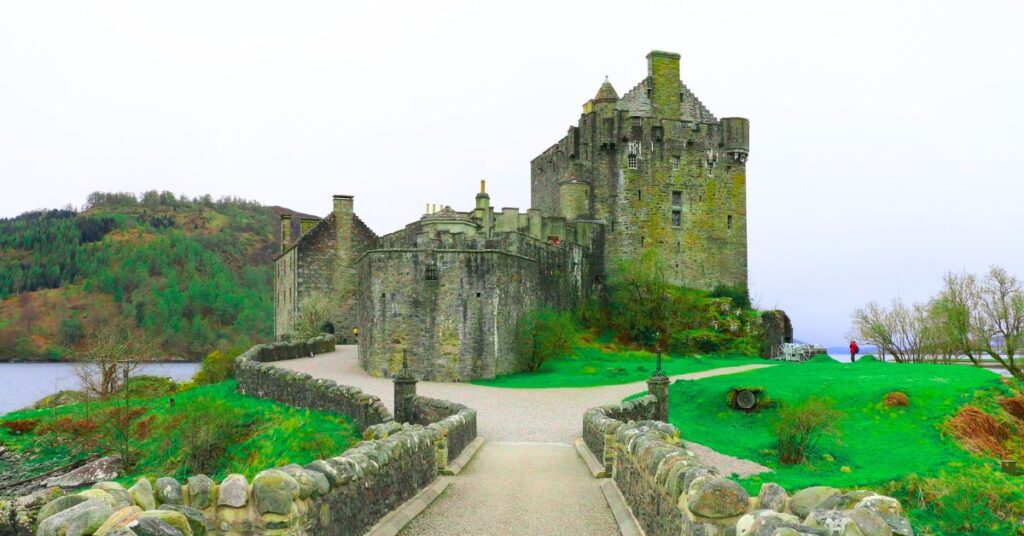
Arguably the most photographe one among the castles in Scotland, Eilean Donan sits on a small island at the dramatic confluence of three sea lochs in the western Highlands. Its name translates as “Island of Donnán,” likely honouring Saint Donnán of Eigg, a 6th-century Irish priest who is said to have established a Christian community on the site.
The original castle was built in the 13th century by King Alexander II as a defence against Viking raiders. Over the centuries it changed hands many times, was expanded and reduced. Ultimately destroyed in 1719 following its involvement in the Jacobite rebellions. The striking castle you see today is actually a meticulous reconstruction, completed in the early 20th century by Lieutenant-Colonel John Macrae-Gilstrap, whose family still owns it.
A favourite with filmmakers, the castle has appeared on screen in Highlander, The World Is Not Enough, and Made of Honour. It also remains a sought-after wedding venue.
Balmoral Castle
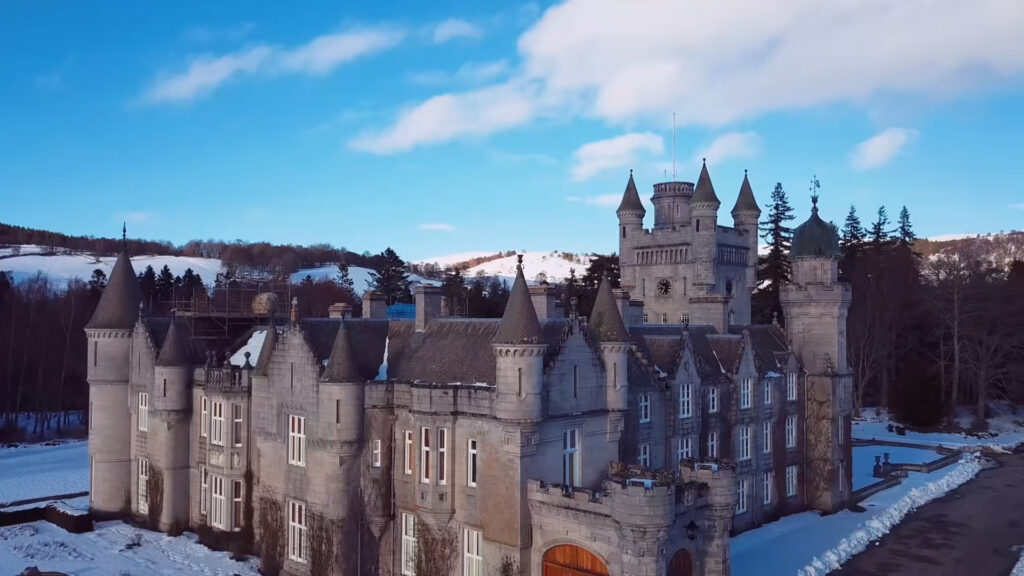
There’s something wonderfully romantic about Balmoral. A grand Scottish Baronial estate tucked away in the Cairngorms, far from London and all its pressures. A Place where the royal family has retreated every summer for over 170 years.
Prince Albert purchased the estate for Queen Victoria in 1852. They loved it so much they knocked down the original castle and built a bigger, grander one, completed in 1856.
Today the estate sprawls across a staggering 50,000 acres of grouse moors, forests, farmland, and hills grazed by Highland cattle, deer, and ponies. It’s a working estate as much as a holiday home. The interior remains private. This is still a working royal residence. But the grounds open up to visitors from April to July, giving you a real taste of the landscape that so captivated Victoria and Albert. So make sure to put this beauty for yout bucket list castles tourr in Scotland.
Good to know: The grounds, café, and gift shop are open April to end of July. If you’re visiting Aberdeenshire, this is well worth combining with a Cairngorms road trip.
Stirling Castle
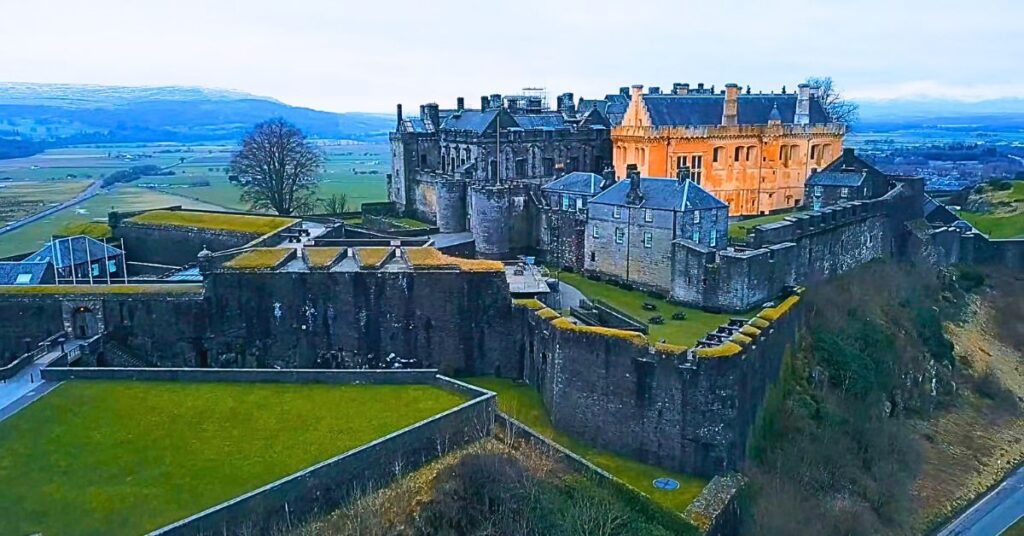
If Edinburgh is the castle that wows you with its treasures, Stirling is the one that hits you with the sheer weight of its history. Perched on a volcanic rock overlooking the River Forth and the flat plains of central Scotland, it controlled the main route between the Highlands and Lowlands for centuries. Whoever held Stirling, the old saying goes, held Scotland — and looking out from the ramparts, you understand exactly why.
The castle has been standing in some form since at least the 12th century. But its crown jewel is the Royal Palace, built by the flamboyant King James V in the 16th century. It’s a breathtaking piece of Renaissance architecture — the kind of thing you’d expect to see in France or Italy. Not perched above a Scottish river.
It was also, famously, the childhood home of Mary, Queen of Scots, which gives the whole place an extra layer of poignancy.
Don’t miss: The Great Hall and the restored Royal Apartments are genuinely spectacular. The views over the Wallace Monument and the battlefield of Bannockburn are extraordinary on a clear day.
Dunvegan Castle
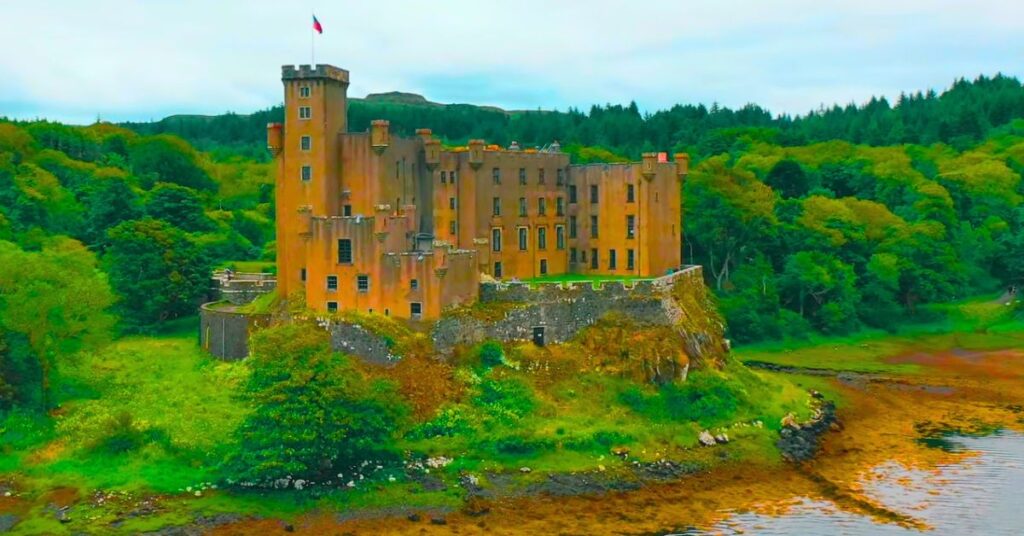
There’s something deeply moving about a castle that has been home to the same family for over 800 years.
Dunvegan, perched on a rocky outcrop above a sea loch on the Isle of Skye. It has been the stronghold of the Chiefs of Clan MacLeod since the 13th century — making it the oldest continuously inhabited castle in the whole of Scotland. That’s not a record, that’s a way of life.
The castle grew gradually over the centuries before a Victorian-era remodelling gave it the picturesque mock-medieval look it has today. The current clan chief, Hugh Magnus MacLeod, is based in London. But the castle still belongs to the family — and their most prized possession is still here.
The Fairy Flag, a fragile ancient textile said to have been gifted by fairies with the power to save the clan in times of crisis. Flag sits in a glass case and somehow makes you feel like you’re in a different world entirely.
Fun fact: The Fairy Flag has been tested by experts who believe the cloth may genuinely be from the 4th to 7th century — its true origins remain a mystery.
Urquhart Castle
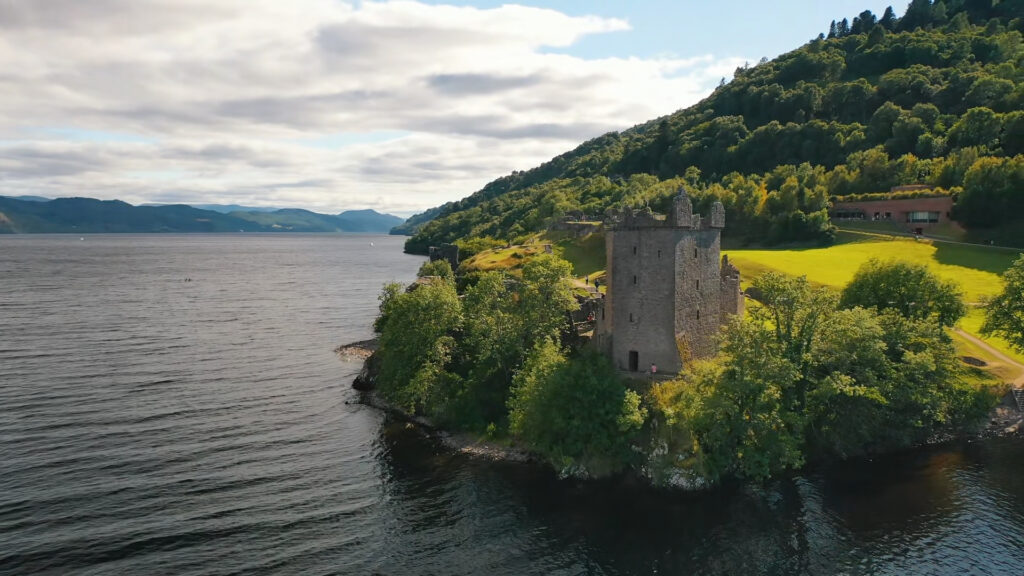
Even if Urquhart Castle weren’t one of the largest castle ruins in Scotland, it would still make this best castles list of for its setting alone.
Standing on a headland jutting out into Loch Ness, with the dark, glassy water stretching away in both directions. It is one of those places where the landscape does as much storytelling as the history. And while you’re scanning the loch from the Grant Tower, you might just be keeping an eye out for something else lurking below the surface…
The castle has a suitably dramatic history to match. It was drawn into the Wars of Scottish Independence, repeatedly raided by the MacDonald Earls of Ross, and finally met its end in 1692 when government troops blew it up deliberately to stop it falling into Jacobite hands. The resulting ruin — silhouetted against the loch at sunset — is arguably more beautiful than the original ever was.
Visitor tip: Urquhart is a natural add-on if you’re doing the Loch Ness route. Combine it with a boat trip on the loch for a memorable day out.
Kelburn Castle
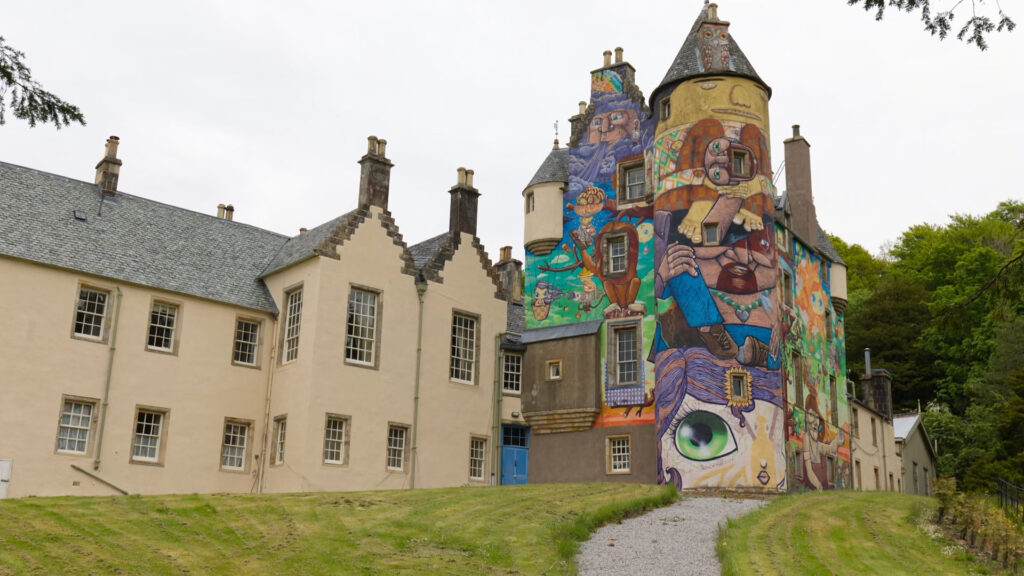
We’ll be honest — Kelburn Castle probably wouldn’t make most people’s shortlists on historical grounds alone. But then you see it, and it immediately earns its place. This is the castle that, in 2007, invited a group of Brazilian street artists — Os Gêmeos, Nina Pandolfo, and Nunca — to cover its walls in enormous, swirling, psychedelic murals. The result is genuinely jaw-dropping: ancient Scottish stonework wrapped in vivid colour, and it works in a way that really shouldn’t.
Don’t overlook its history, though. The Boyle family have held these lands since the 12th century. It is Kelburn the oldest castle in Scotland to have been continuously owned by the same family. The graffiti was meant to be temporary, but visitors loved it so much it’s been allowed to stay. Which tells you everything you need to know about how special this place is.
Worth knowing: Kelburn Estate is a family-friendly attraction with woodland trails, a secret forest, and a country centre — not just the castle itself.
Glamis Castle
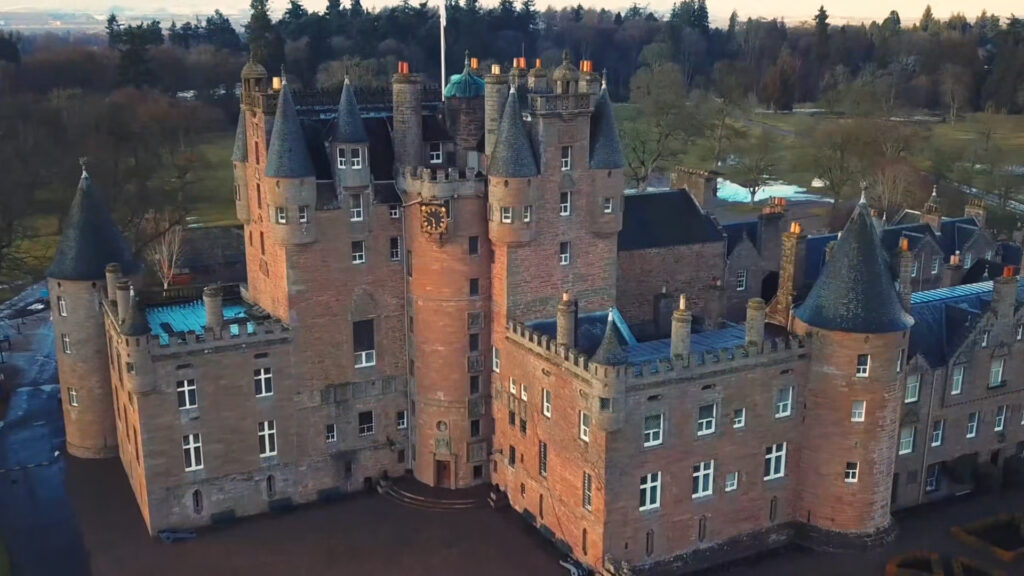
If you want a castle that feels genuinely atmospheric exploring castles in Scotland— one where the stories seem to seep out of the walls — Glamis is your answer.
The home of the Lyon family for over 650 years. This towering Angus castle has royal connections, literary connections, and more than its fair share of legends. It was the childhood home of Queen Elizabeth, the Queen Mother, and the birthplace of Princess Margaret. It’s also thought to be one of the inspirations for Macbeth’s castle — and honestly, on a grey Scottish morning, you can absolutely feel it.
The legends are hard to resist. There’s supposed to be a sealed chamber somewhere in the castle holding a monstrous secret — a “monster” or mysterious prisoner hidden from the world. There are ghost stories, too: the spirit of a young boy who fell from a high tower is said to still haunt the halls. Whether you believe any of it or not, Glamis has a way of making you wonder.
Visiting? Open April to October. The gardens alone are worth the trip — and the tearoom does a very decent cream tea.
Blair Castle
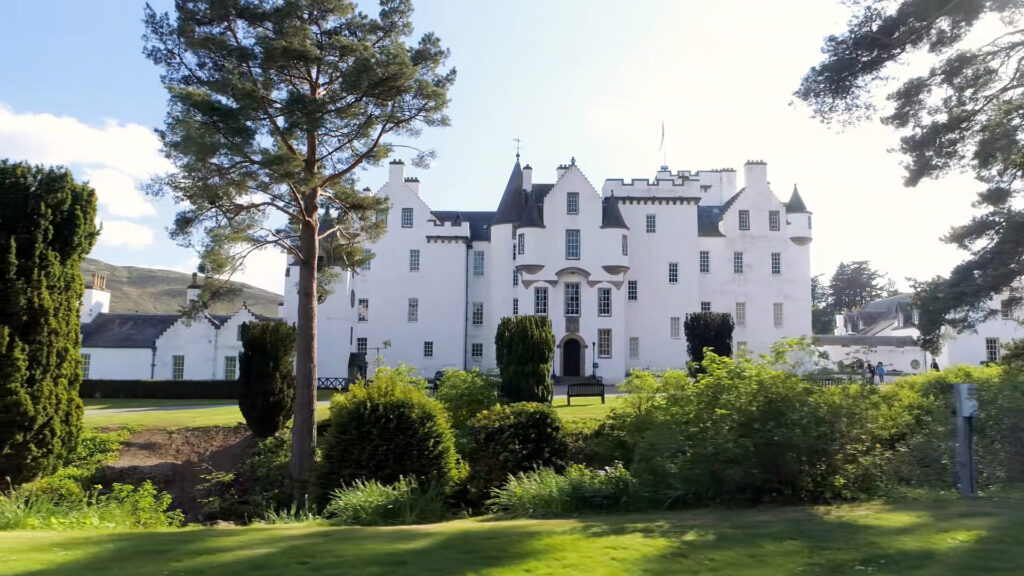
Nestled in the heart of Perthshire’s stunning Highland Perthshire valley, Blair Castle is the kind of place that reminds you why Scotland punches so far above its weight when it comes to history and heritage.
Construction began way back in 1269, and over the following seven centuries it shapeshifted from a medieval tower house into a Georgian mansion and finally into the gleaming white Victorian Baronial castle you see today — each era leaving its fingerprints on the building.
The real talking point, though? The Dukes of Atholl are the only people in Europe legally permitted to maintain their own private army. The Atholl Highlanders have been around since the 18th century and are still active, which makes Blair Castle the kind of place where history doesn’t just sit behind glass — it’s still very much alive.
Insider tip: Visiting in late May? You might catch the Atholl Highlanders parade — one of the most unique and memorable events in the Scottish calendar.
Blackness Castle
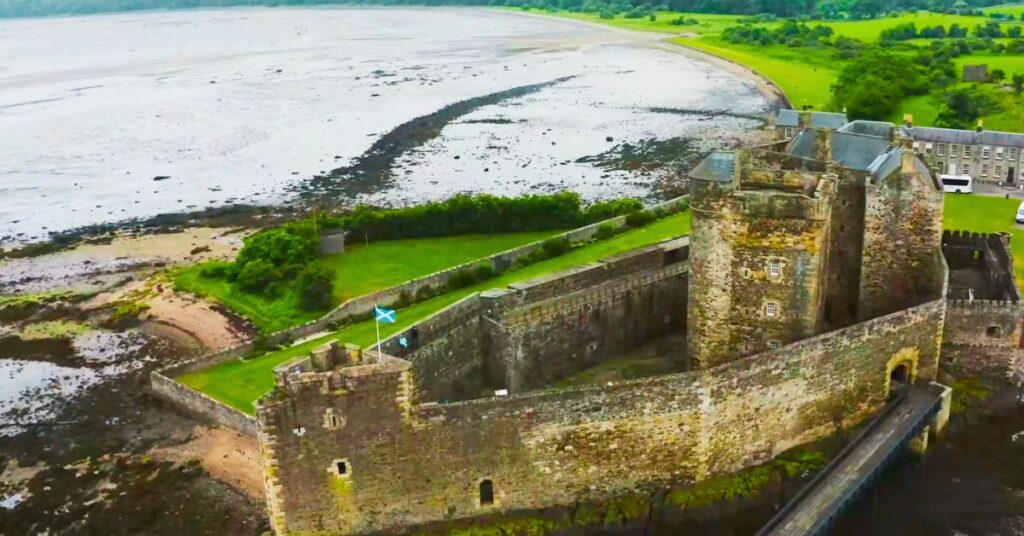
Rounding off our list is a castle that doesn’t get nearly enough attention, and frankly, it deserves far more. Blackness sits on the south shore of the Firth of Forth, jutting out into the water on a rocky spit in a way that makes it look, unmistakably, like a ship that has run aground.
Hence the nickname — “the ship that never sailed” — which is one of the most fitting monikers of any castles in Scotland.
Built in the 1440s by Sir George Crichton, one of the most powerful men in Scotland at the time, Blackness went on to serve as a garrison fortress and a state prison. It’s been heavily involved in Scottish political history, often in dark and unpleasant ways. Today it’s managed by Historic Environment Scotland.
Castle found a new kind of fame as a filming location — Outlander fans in particular will know it well. It also starred in Hamlet and Outlaw King.
Hidden gem alert: Blackness is easy to combine with a visit to Linlithgow Palace just a few miles away.
Planning your Scottish castle trail?
Castles in Scotland aren’t just old buildings — they’re living chapters of one of the most dramatic stories in European history.
The best advice? Don’t rush. Slow down, let the stories sink in, and pack a good waterproof jacket. This is Scotland, after all.