Discover most beautiful places to visit in Iran ans a pro from 6,000-year-old tapestry of sapphire-tiled mosques, wind-swept deserts, and some of the most hospitable people you will ever meet.
Iran—the ancient land of the Persians is unique country located in the crossroads of West, Central, and South Asia. Iran is a country with might definitly supriced yout if you are only listen to what media says about them.
If you’re planning a journey to this crossroads of civilizations, here are the 10 must-visit spots that prove Iran is one of the most beautiful destinations on Earth.
01. Tehran: Where Ancient History Meets High-Energy Chaos
we start our voyage in the country’s capital.
Tehran is a city that never stands still. Spread across the foothills of the towering Alborz Mountains, it’s a massive metropolis that manages to balance 6,000 years of history with the frantic energy of a modern capital. It’s loud, it’s busy, and it’s absolutely captivating.
Things to do in Tehran
The Crown Jewel: Golestan Palace
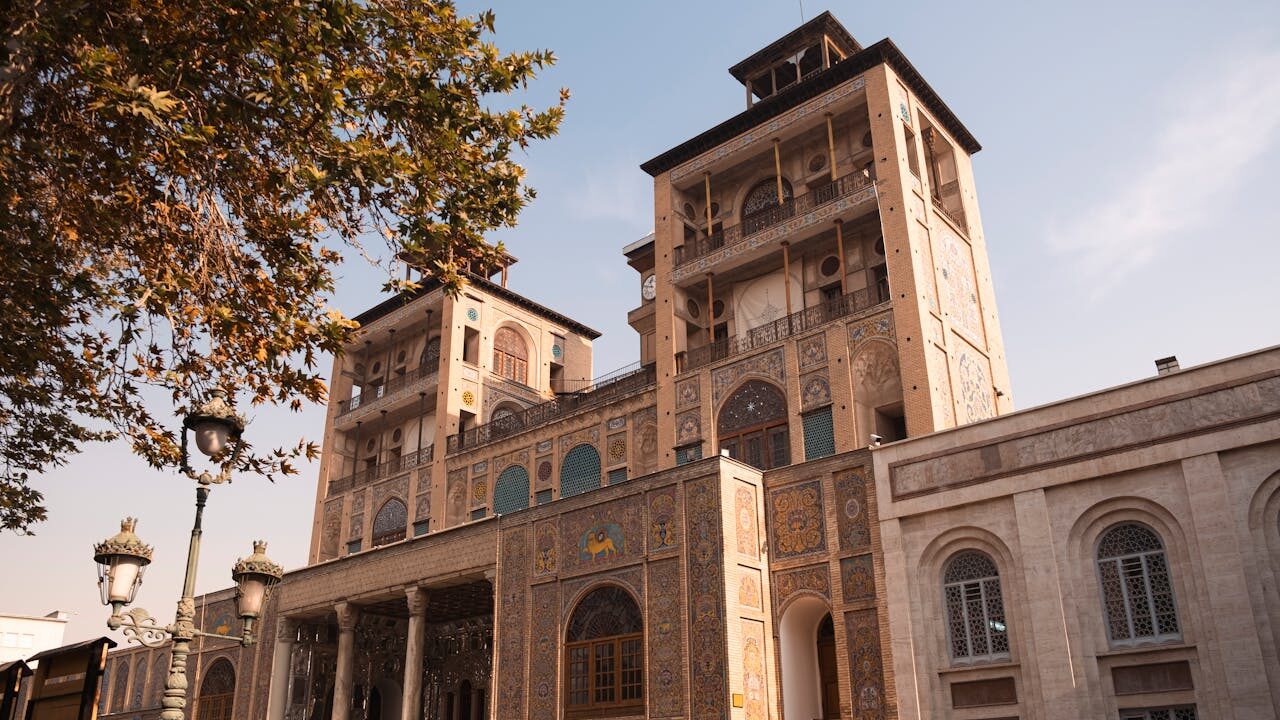
If you only have time for one historical site, make it the Golestan Palace. Walking into this UNESCO World Heritage site feels like stepping out of the city’s traffic and into a royal dream.
- Don’t miss: The Hall of Mirrors. Standing inside, you’ll see why it was the seat of the Qajar dynasty—the craftsmanship is breathtaking.
- The “Human” View: Be sure to look for the Shams-ol Emareh (Edifice of the Sun). It was once the tallest building in the city, and the King used it to look out over his kingdom.
The Glittering Treasures
Tehran houses some of the most valuable artifacts in human history, so make sure to spend some time exploring the city’s museums. In our experience, they never disappoint.
- The Treasury of National Jewels: This isn’t just a museum; it’s a vault. It holds the world’s largest uncut diamond and the famous Peacock Throne. It’s hard to wrap your head around the sheer amount of gold and gems until you’re standing right in front of them.
- National Museum of Iran: For the history buffs, this is a must. It tracks Persia’s story from prehistoric times all the way to the present day.
An Icon: The Azadi Tower
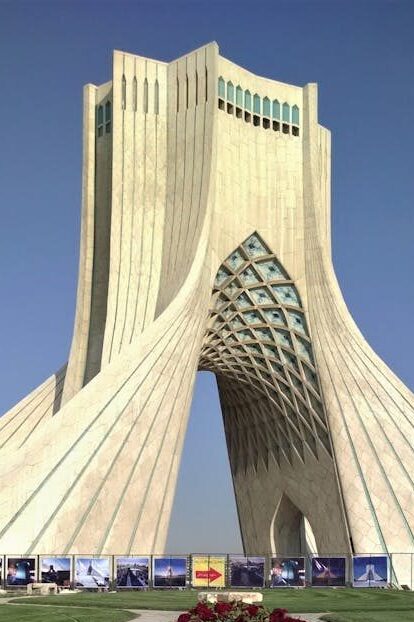
You’ve seen it on postcards, but the Azadi Tower is even more impressive in person. It’s the gate to the city and a symbol of Iranian pride.
- Pro Tip: Take the elevator to the top. From there, you get a panoramic view of Tehran’s sprawling skyline with the snow-capped mountains in the background. It’s the best spot to see just how big this city really is.
Get Lost in the Grand Bazaar
You haven’t truly experienced Tehran until you’ve been to the Grand Bazaar. It’s one of the largest and oldest in the world, and it’s a sensory overload in the best way possible.
- The Vibe: It’s a literal maze of winding alleys. You’ll smell the spices before you see them, hear the calls of merchants, and see hand-woven carpets that took years to complete.
- Survival Tip: Don’t worry about getting lost—that’s part of the fun. Just follow the flow of the crowd and grab some local street food along the way.
The Grand Finale: Sunset at Tabiat Bridge
As the sun begins to set, make our way to the Tabiat Bridge. This isn’t your average overpass; it’s a three-story pedestrian masterpiece that connects two of the city’s greenest spaces, Taleghani Park and Abo-Atash Park.
- A View Like No Other: Hovering 40 meters above the busy Modarres Highway, the bridge offers a surreal contrast. You’ll have the rushing river of city traffic below you and the silent, majestic Alborz Mountains towering in the distance.
- The Vibe: This is Tehran’s “living room.” In the evening, the bridge glows with multi-colored lights, and you’ll find families, artists, and couples enjoying the fresh air.
- Dinner with a View: The lower level is packed with cafes and the Wooden Road Foodcourt. It’s the perfect spot to grab a Persian tea or a full dinner while watching the city lights flicker on across the skyline.
Tip: If you’re a photographer, the “Blue Hour” (just after sunset) is magic here. The curves of the bridge resemble tree branches, making for some of the most unique shots you’ll get in all of Iran.
This is just a fraction of the places inside Tehran we explored during our limited time there. But I’m sure you guys now understand why Tehran is one of must-visit places in Iran.
02. Isfahan: A Journey Into the “Half of the World”
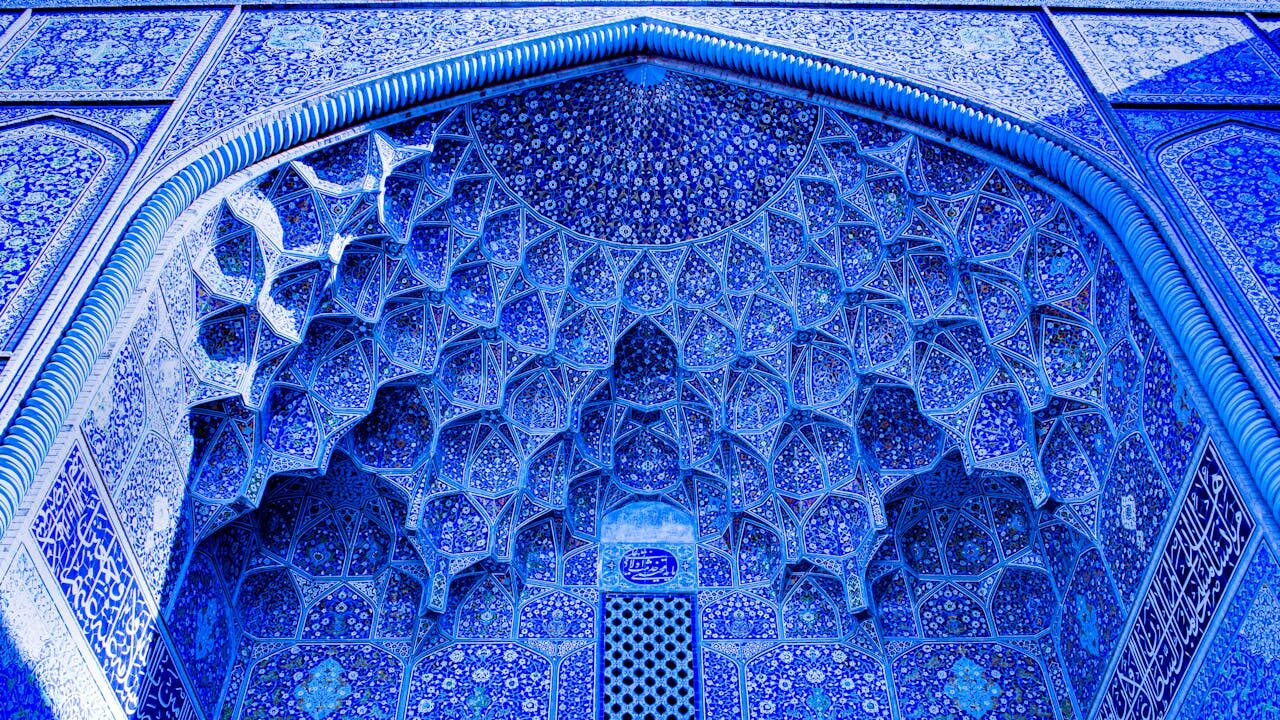
When we talk about places to visit in Iran there is a place can’t miss.
Isfahan..
If there is one city that captures the soul of ancient Persia, it is Isfahan. Located about 340 kilometers south of Tehran, this city was once the glorious capital of the Safavid Empire. There is a local saying: “Esfahan nesf-e-jahan”—Isfahan is half the world.
When you arrive, you’ll quickly see why. From sapphire-tiled domes to ancient fire temples, here is your guide to exploring the architectural heart of Iran.
Things to do in Isfahan
Naqsh-e Jahan Square: The Center of the Universe
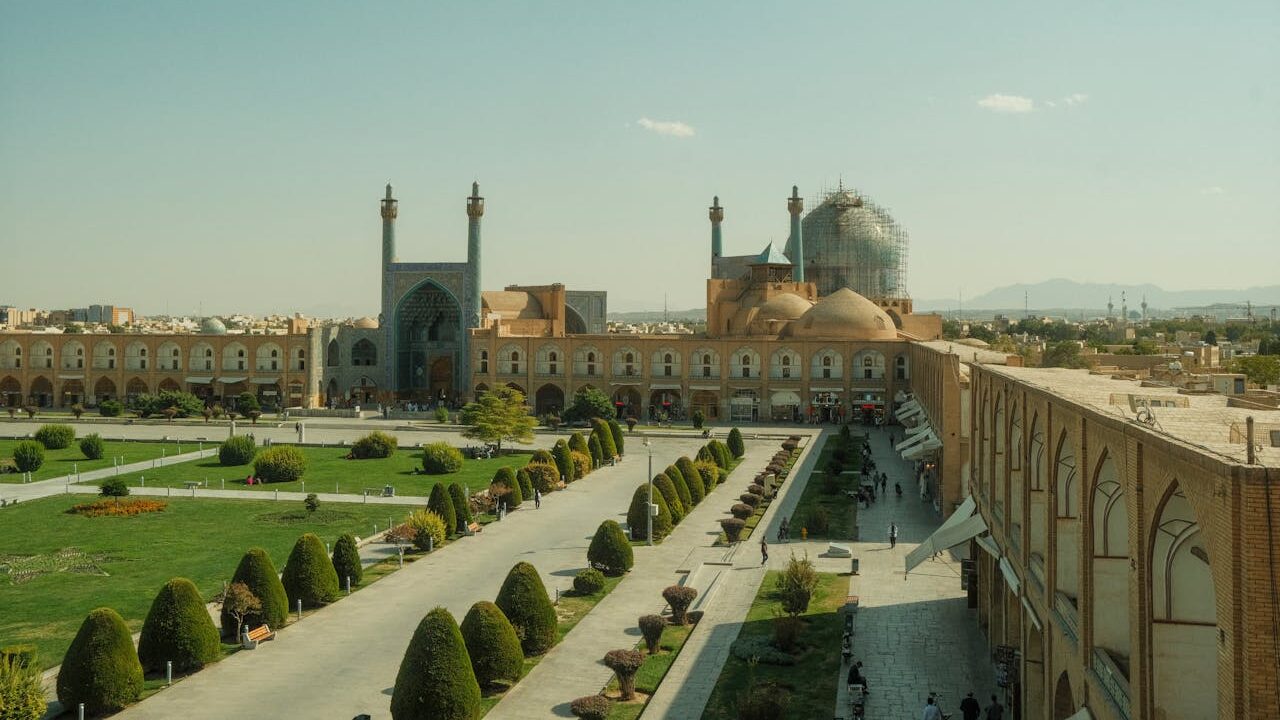
Everything in Isfahan starts here. This UNESCO World Heritage site is one of the largest city squares on the planet. Surrounded by a massive bazaar and royal monuments, it feels less like a tourist site and more like a living room for the city.
- The Vibe: In the late afternoon, families gather on the grass, horse-drawn carriages clatter across the stone, and the call to prayer echoes off the ancient walls. It’s pure magic. Local are very friendly and so welcoming. Makes everything much better.
The Shah Mosque (Masjid-e Shah)
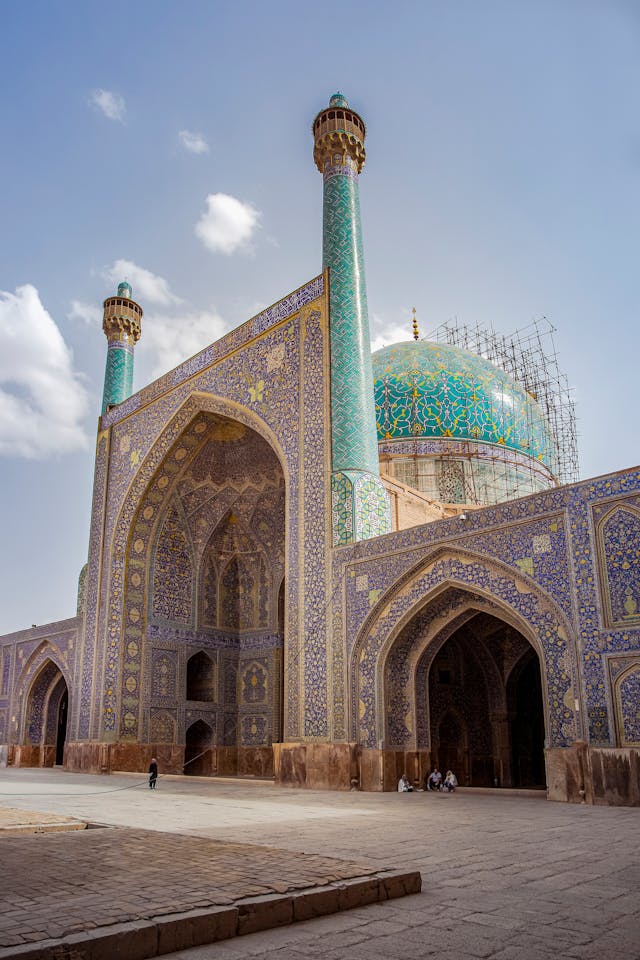
This is arguably the most beautiful mosque in Iran. Built between 1611 and 1630 under Shah Abbas I, it is a masterpiece of blue-tiled mosaics and calligraphy.
- Tip: Stand directly under the center of the great dome and stomp your feet or clap your hands. Because of the incredible acoustic engineering, you’ll hear seven distinct echoes.
Sheikh Lotfollah Mosque: The Royal Sanctuary
Located on the eastern side of the square, this mosque is unique because it has no minarets. Why? Because it was built specifically for the Royal Family, not the public.
- The Highlight: Look up at the dome. The tile work is so intricate that it’s often compared to a peacock’s tail. As the sun moves throughout the day, the colors of the dome shift from cream to a warm pink.
Ali Qapu Palace: The Royal View
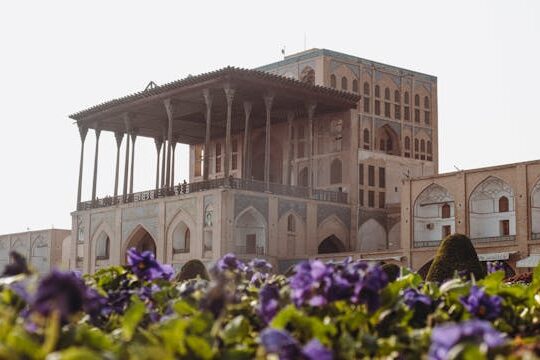
Situated opposite the Sheikh Lotfollah Mosque, this was the residence of the Safavid kings.
- The View: You must climb the narrow spiral staircase to the upper terrace. From here, you get a “king’s eye view” of the entire Naqsh-e Jahan Square.
- The Music Room: On the top floor, check out the acoustic room where the walls are carved with shapes of vases and instruments—designed to make the music sound perfect for the Sultan.
Chehel Sotoun: The Palace of Forty Columns
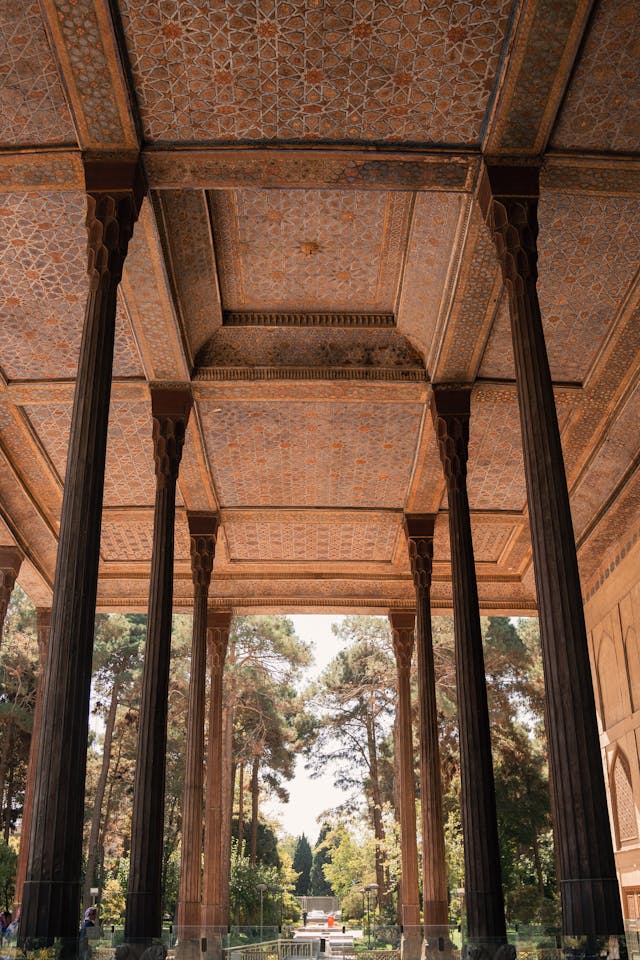
Set within a lush Persian garden, this palace was built by Shah Abbas II for entertaining foreign dignitaries.
- The Optical Illusion: The palace only has 20 wooden pillars, but they reflect so perfectly in the long pool out front that they appear to be 40—hence the name “Chehel Sotoun” (Forty Columns).
- The Art: Inside, the walls are covered in massive frescoes that tell the stories of epic battles and royal banquets.
Atashgah: The Ancient Zoroastrian Fire Temple
If you want to step even further back in time, head eight kilometers west of the city to the Atashgah. This Sassanid-era archaeological site sits on a hill and dates back over 2,500 years.
It’s a bit of a hike to the top, but standing among the mud-brick ruins of an ancient fire temple while looking out over the Zayanderud River is a powerful experience. It’s a quiet contrast to the bustling city center.
03. Yazd: The Ancient Desert City That Never Got Hot
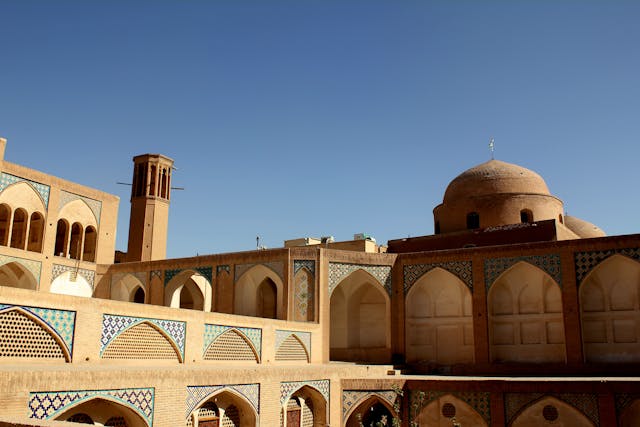
If you want to see how humans lived in the desert thousands of years ago, you go to Yazd. Located between the Dasht-e Kavir and Dasht-e Lut deserts, Yazd is a UNESCO World Heritage site that feels like a living museum.
It is a city of “badgirs” (windcatchers)—ancient air conditioning towers that poke out from a skyline of mud-brick rooftops. Here is how to spend your time in this desert oasis.
Things to do in Yazd
The Old Town: A Living Maze
The best way to see Yazd is to get lost. The Old Town is one of the oldest continuously inhabited places on Earth.
- The Architecture: The walls are made of kahgel (clay and straw), which keeps the interior of the houses incredibly cool even when the desert sun is scorching.
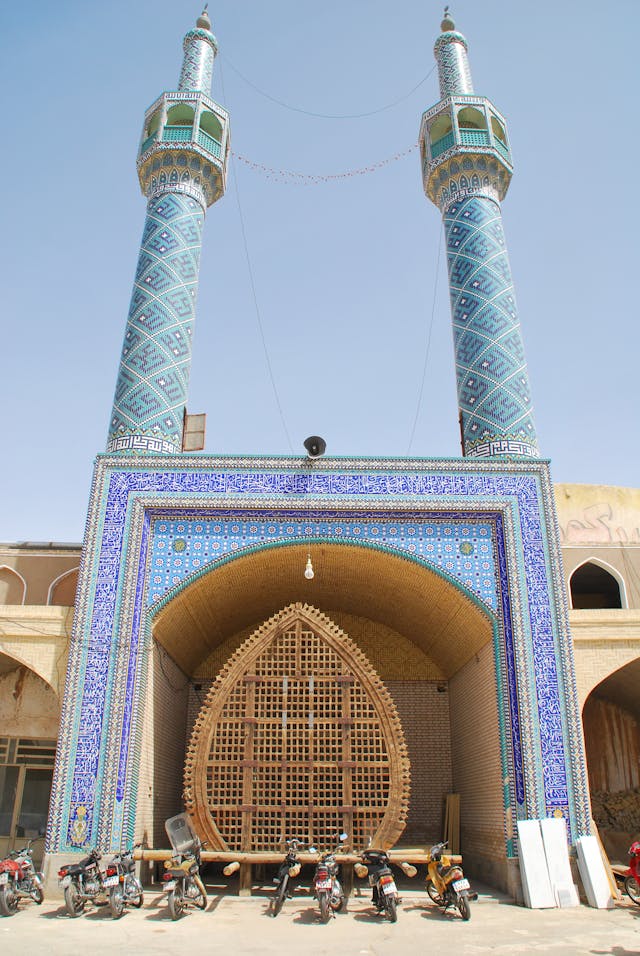
- Jameh Mosque of Yazd: As you wander, look for the two highest minarets in Iran. This 800-year-old mosque is covered in turquoise tiles that look like a mirage against the brown desert sand.
Amir Chakhmaq Complex: The Heart of the City
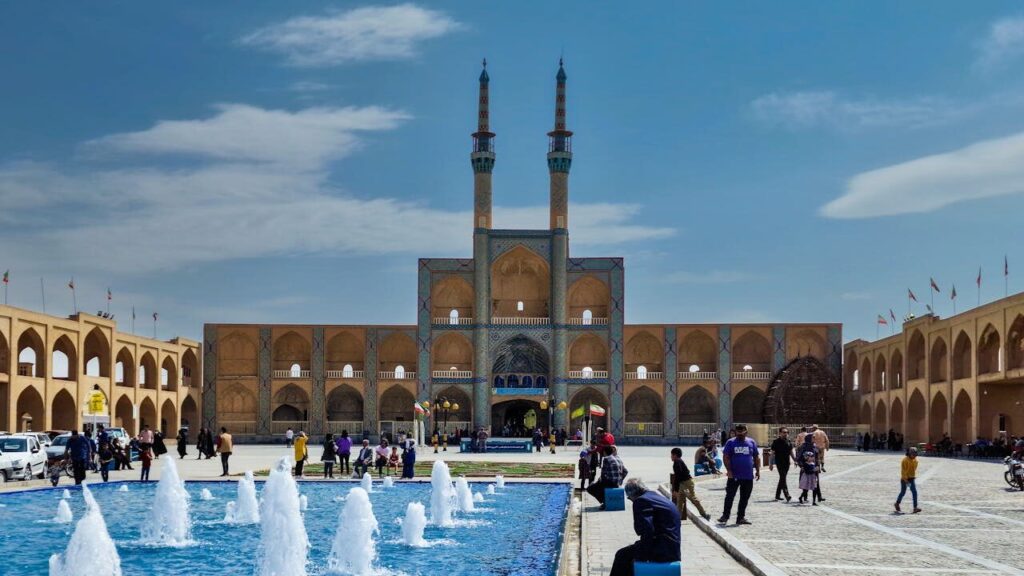
This is the most iconic landmark in Yazd. Named after a 15th-century governor, the complex features a stunning three-story facade with perfectly symmetrical alcoves.
- The Night View: Visit at sunset. The alcoves are lit with a warm orange glow, and the large reflecting pool out front makes for the perfect photo.
- Local Tip: Right next to the square, you’ll find some of the best qutab (Persian almond pastries) in the country.
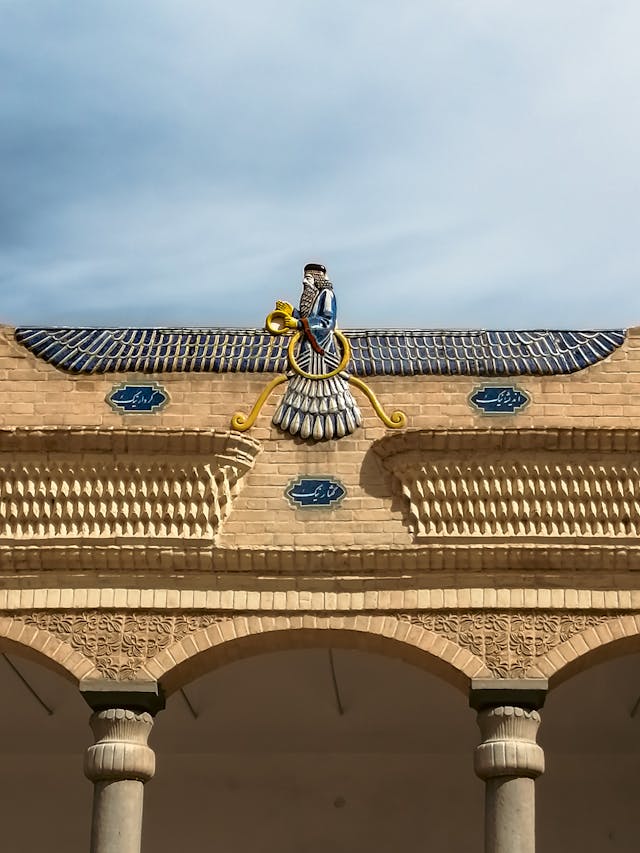
The Zoroastrian Fire Temple (Atash Behram)
Yazd is the center of the Zoroastrian faith in Iran. This temple is one of the most sacred sites in the world for Zoroastrians.
- The Eternal Flame: Inside, behind a glass wall, burns a fire that has supposedly been kept alive for over 1,500 years. It was moved several times to keep it safe from invaders, finally finding its home here.
The Towers of Silence (Dakhmeh)
On the outskirts of the city, two stark, circular towers rise from the desert floor. These are the Towers of Silence.
- The History: Until the mid-20th century, Zoroastrians practiced “sky burials” here. They believed that fire and earth were too sacred to be polluted by the dead, so they placed bodies atop these towers to be returned to nature by the elements and birds.
- The Experience: It’s a bit of a steep walk to the top, but once you’re there, the silence is profound. You can look back at the city and see the vast, empty desert stretching out behind you.
The Secret of the Windcatchers
We can’t talk about Yazd without mentioning the Badgirs. These towers catch even the slightest breeze and funnel it down into the houses, often passing it over underground water channels (called Qanats) to create a natural refrigerator.
- Don’t Miss: Visit Dolat Abad Garden to see the tallest windcatcher in the world. Standing directly underneath it feels like standing in front of a powerful electric fan!
04. Shiraz: A City That Smells Like Orange Blossoms and Poetry
If Tehran is the busy heart of Iran, Shiraz is the soul. It’s a city where life moves a little slower, the tea tastes a little sweeter, and the gardens are always in bloom. Known as the “City of Love,” Shiraz isn’t just about old buildings—it’s about a specific feeling of peace that you won’t find anywhere else.
Things to do in Shiraz
The “Pink Mosque” (Nasir al-Mulk)
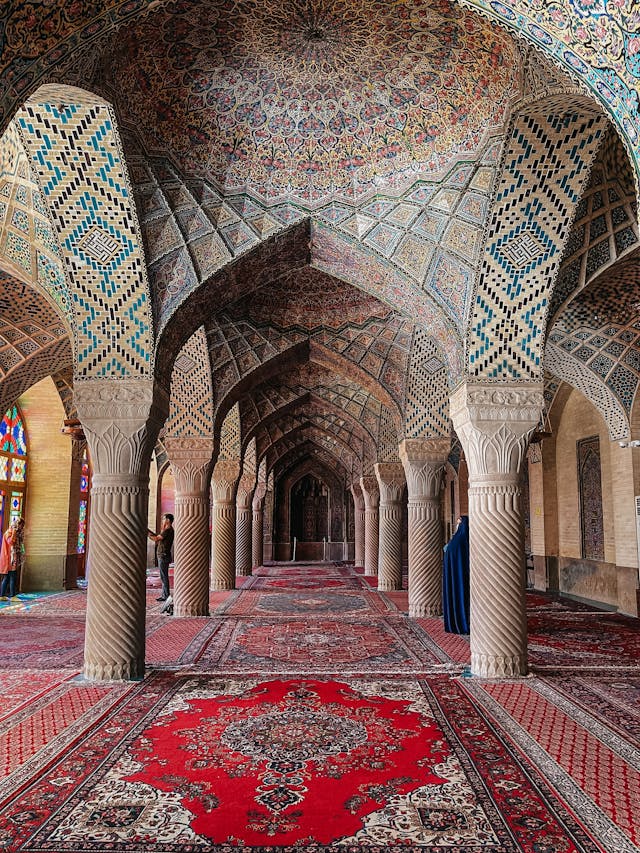
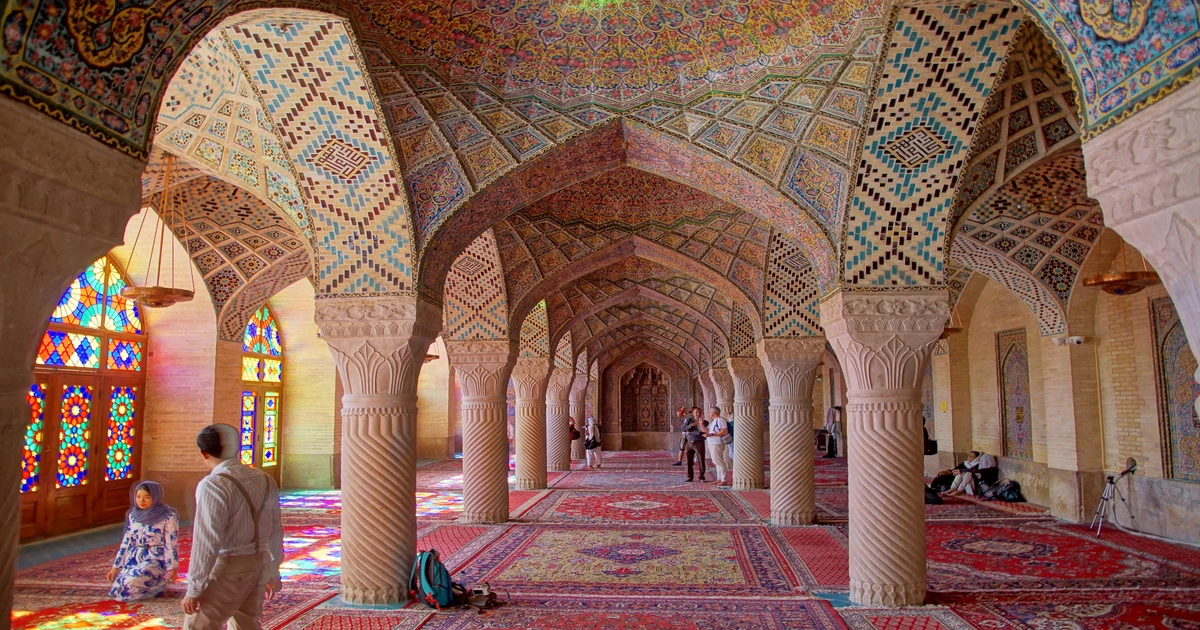
You’ve probably seen this mosque on social media, but standing inside it at 8:00 AM is a spiritual experience.
My Advice: Go as early as possible. By 10:00 AM, the “magic” light fades. Don’t just take photos; sit on the rug for a minute and watch how the colors move across the room.
The Magic: As the morning sun peaks through the stained-glass windows, the entire floor turns into a kaleidoscope. It feels like you’re standing inside a jewelry box.
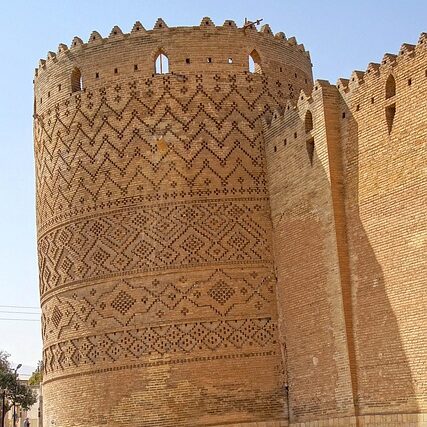
The “Leaning Tower” of the Arg (Citadel)
Right in the middle of the city sits the Arg of Karim Khan, a massive fortress that looks like a giant sandcastle.
Look Closely: One of the four corner towers is leaning at a strange angle because of the underground water. It’s the “Leaning Tower of Shiraz.”
Inside: Behind those heavy walls is a quiet courtyard with citrus trees and beautiful tile work—a perfect escape from the city noise.
Getting Lost in the Vakil Bazaar
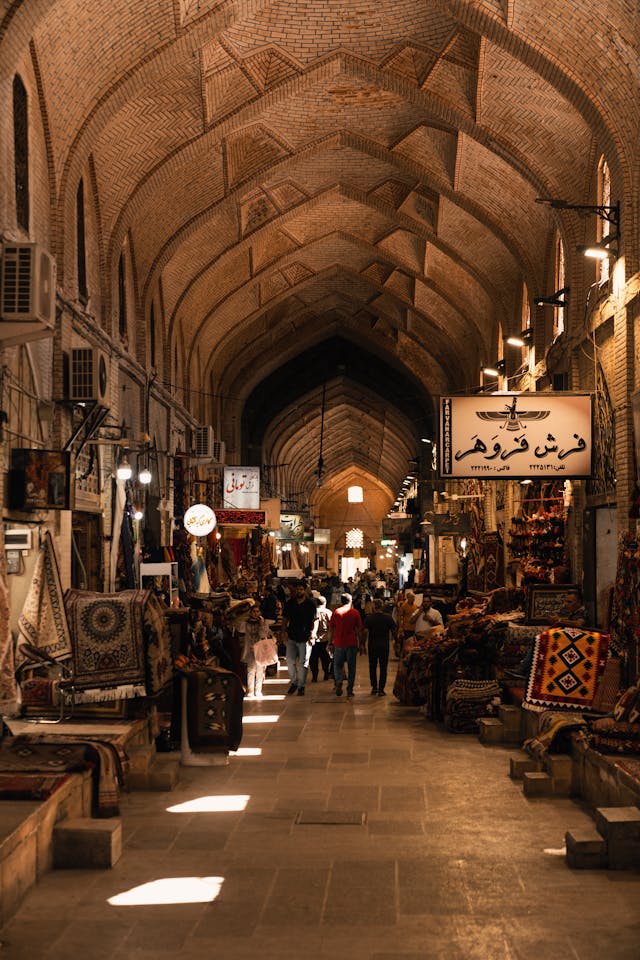
This is one of the most atmospheric markets in Iran. Because it’s built with high, arched brick ceilings, it stays naturally cool even in the heat of summer.
The Sights & Smells: You’ll hear the rhythmic “clink-clink” of copper smiths and smell the sharp scent of saffron and dried rosebuds.
What to Look For: This is the best place to find handmade Persian rugs. Even if you aren’t buying, the shopkeepers are usually happy to show you their art and offer you a cup of tea.
05. Persepolis: Walking in the Shadows of the Persian Empire
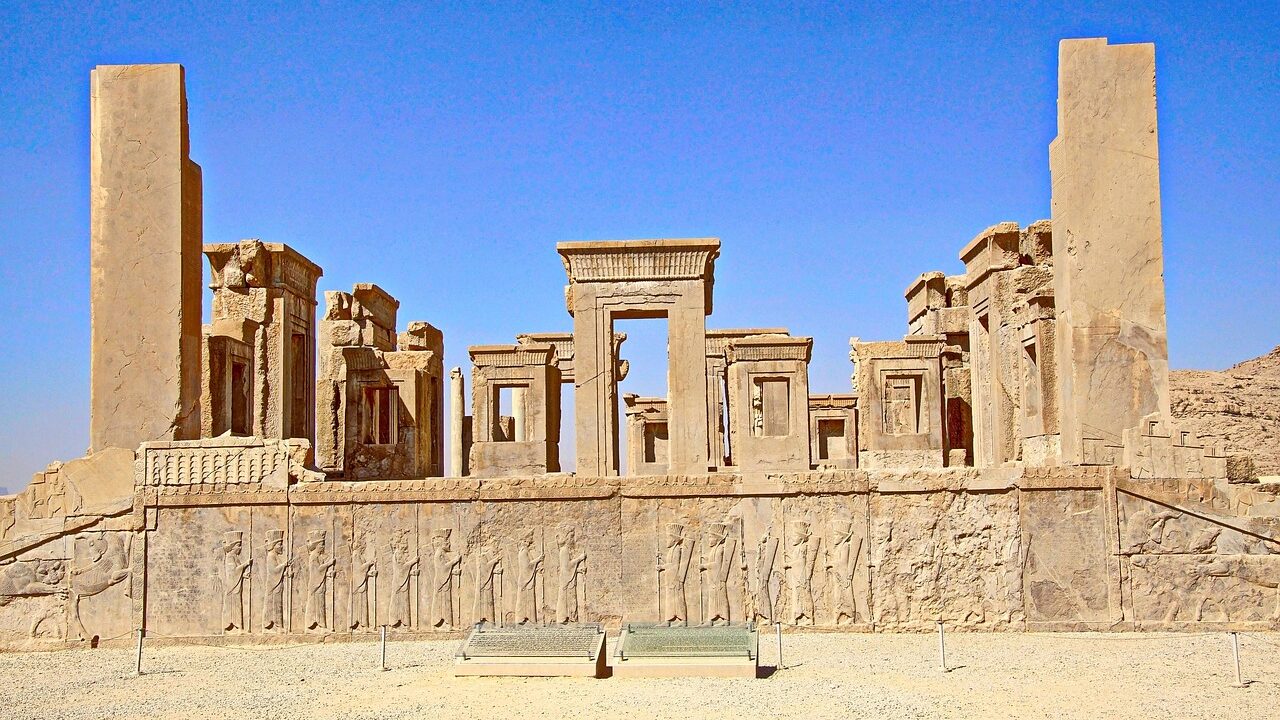
A short drive outside the city of Shiraz takes you to the ruins of Persepolis. This was the center of the world 2,500 years ago.
If you want to feel the true weight of history, you have to visit Persepolis. Known locally as Takht-e Jamshid (The Throne of Jamshid), this wasn’t just a city—it was a statement.
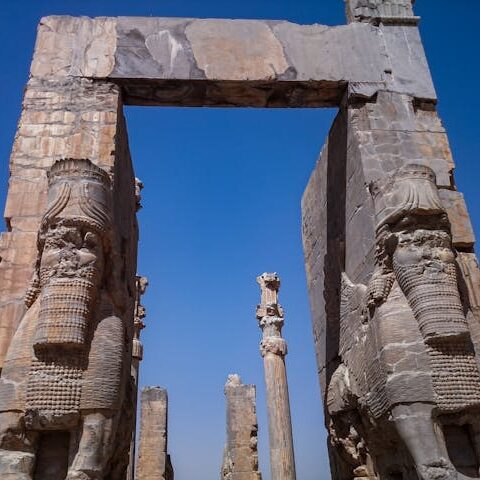
Founded by Darius the Great over 2,500 years ago, it was the ceremonial heart of the Achaemenid Empire, designed to leave every visitor in absolute awe, and it certainly did.
Even today, standing among the ruins, you can still feel that power.
Our journey starts exactly where ancient kings and foreign diplomats once stood. The Gate of All Nations is guarded by massive stone bulls with human heads (Lamassu).
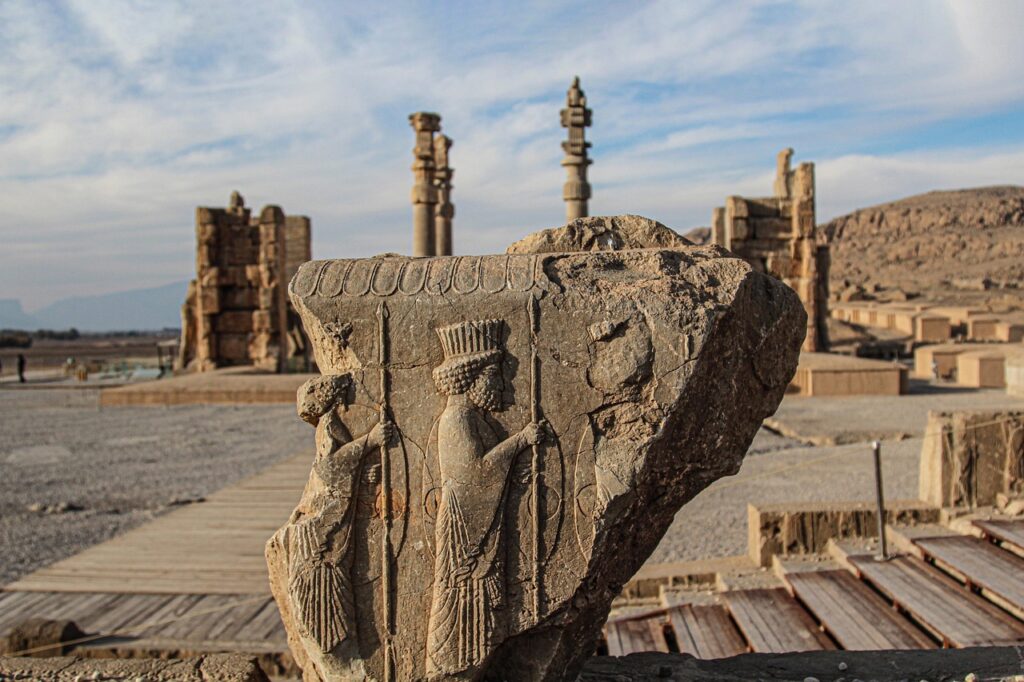
Next, we explored The Apadana Palace. This was the most important building in the entire complex. The Apadana was a massive audience hall where the King received foreign delegations.
It once held 72 towering columns. Today, only a few remain, but they still reach toward the sky like stone giants.
Take your time walking up the ceremonial stairs. The walls are covered in incredibly detailed carvings (reliefs) showing people from across the empire—from Ethiopians to Indians—bringing gifts like lions, gold, and fine fabrics to the King. The detail in their clothes and hair is still sharp after thousands of years.
As we walk through the ruins of the Palace of 100 Columns, it’s impossible not to think about how it all ended. In 330 BCE, Alexander the Great captured the city and, according to legend, burned it to the ground in an act of revenge.
Tips for Your Visit:
- Beat the Heat: Persepolis is in an open plain with very little shade. Go at 8:00 AM or wait until two hours before sunset. The “Golden Hour” light makes the limestone glow a deep honey color—it’s a photographer’s dream.
- Hire a Guide: There aren’t many signs explaining what you’re looking at. A local guide can point out the small details, like the ancient symbols of Faravahar (Zoroastrianism) hidden in the carvings.
- Wear Good Shoes: You’ll be walking on uneven stone and dust all day. Leave the sandals at home!
Conclution
A Final Thought… I’ll be honest: before I visited these places, I wasn’t sure what to expect. But that’s the beauty of traveling—the world is almost always kinder and more beautiful than we imagine.
Iran isn’t just a collection of old buildings; it’s the smell of saffron in the air, the overwhelming kindness of strangers offering tea, and the way the desert silence feels at sunset.
If you’ve been dreaming of a trip that changes the way you see the world, this is it. What’s the one place on this list that stopped your scroll? Let’s talk about it in the comments. I’d love to hear your thoughts