
Finding the absolute best places to visit in the Philippines is the first step toward planning an unforgettable expedition. From tectonic wonders and perfectly formed stratovolcanoes to marine sanctuaries teeming with prehistoric life, this country defies the imagination.
Whether you want to trek through ancient mountain ranges or dive into crystal-clear waters, this comprehensive 2026 guide covers the top destinations across the archipelago that you simply cannot miss.
1. Palawan: The Last Ecological Frontier
This is a place consistently ranked among the most beautiful islands in the world. Palawan is a sweeping wonderland of limestone cliffs, hidden lagoons, and ancient ecosystems. For travelers seeking raw natural beauty, it is the undisputed crown jewel of places to visit in the Philippines.
Puerto Princesa’s Underground River
In the capital region, you’ll find the Puerto Princesa Subterranean River National Park. This UNESCO World Heritage Site features an 8.2-kilometer navigable underground river that winds through a spectacular limestone cave system before emptying directly into the sea. Navigating this cave reveals massive chambers and intricate stalactite formations.
El Nido
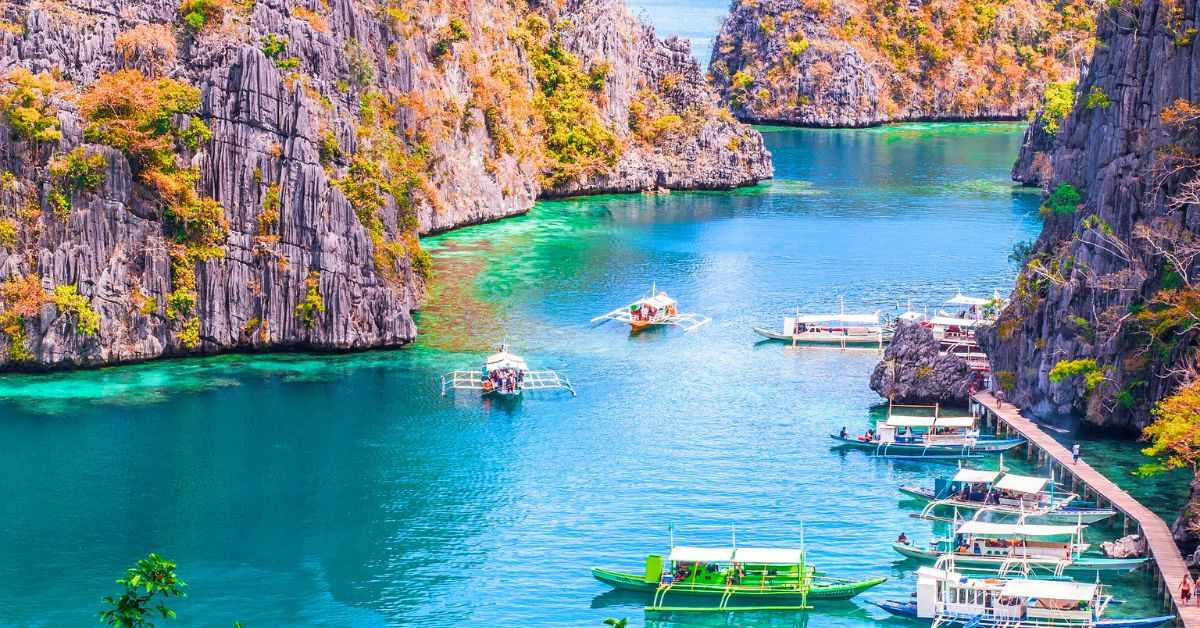
Further north lies El Nido, a dramatic landscape of towering karst limestone cliffs rising sharply out of turquoise waters. Here, you can spend days island-hopping through hidden beaches, secret lagoons, and vibrant coral gardens that feel completely cut off from the modern world.
Coron Island
No expedition to Palawan is complete without exploring Coron. Renowned for its jagged topography, Coron is home to Kayangan Lake—widely considered the cleanest lake in Asia. You can swim through a narrow rocky passage to enter the Twin Lagoon, or gear up for world-class wreck diving to explore perfectly preserved Japanese WWII shipwrecks resting at the bottom of the bay.
2. Boracay: The Powdery White Sand Paradise
Boracay is a tiny, bone-shaped island in the Western Visayas that has earned global fame for having some of the softest, most beautiful sand on Earth. It perfectly balances sun-soaked relaxation with a high-energy coastal lifestyle.
White Beach and Beyond
Imagine White Beach, a four-kilometer stretch of powdery white sand met by calm, brilliant turquoise waters. That is Boracay.
It’s a go to spot for parasailing, windsurfing, and paddleboarding.
Take a short trip up to Mount Luho, the highest point on the island. Viewpoint worth the hike.
Maybe wait till sunset.. It is Magical..
3. Cebu: The Hub of Adventure and Culture
Cebu is a perfect mix of historical depth, urban energy, and intense outdoor adventures. It serves as the main transport hub for the Visayas region, So it highly accessible.
In the bustling city center, you can stand before Magellan’s Cross is a famouse stop. It is a historic landmark dating back to the Spanish colonial era in 1521.
But the real magic happens when you head south into the wilderness. In the municipality of Badian lies Kawasan Falls, a stunning, three-tiered waterfall famous for its vibrant, alligator-blue water and surrounding jungle canyons.
Coastal Escapes
Cebu’s coastlines are premier marine destinations. You can go island hopping around Bantayan Island, see the world-famous sardine run in Moalboal, or head to Oslob for a structured eco-tour to view gentle giant whale sharks up close in their natural coastal habitat.
4. Siargao: The Surfing Capital of the Philippines
If you are looking for a laid-back coastal vibe mixed with world-class wave dynamics, Siargao is the island to target. It has evolved from a secret surfer outpost into a thriving hub for digital nomads, creators, and beach lovers.
Cloud 9 and Natural Wonders
The island is famous for Cloud 9, a heavy, hollow peak that attracts international surfers and hosts global competitions. However, Siargao offers plenty of attractions for non-surfers as well:
- Sugba Lagoon: Take a traditional wooden boat out to this stunning body of turquoise water surrounded by a sprawling, protected mangrove forest perfect for paddleboarding.
- Magpupungko Rock Pools: During low tide, these natural, crystal-clear tidal pools emerge along the coast, framed by dramatic rock formations that create the ultimate natural swimming pools.
5. Tubbataha Reefs Natural Park: A Marine Sanctuary
For scuba divers and marine conservationists, Tubbataha Reefs Natural Park is the absolute holy grail of the places to visit in the Philippines. Located isolated in the middle of the Sulu Sea, this UNESCO World Heritage Site covers over 97,000 hectares of pristine coral reef ecosystems.
Unparalleled Marine Biodiversity
Tubbataha consists of two massive coral atolls surrounded by deep, abyssal waters. Because of its remote location, the coral walls and vertical drop-offs are incredibly well-preserved. The park is home to over 600 species of fish, pristine coral gardens, sea turtles, and numerous species of sharks. It is widely regarded as one of the best dive sites on Earth, accessible only via specialized liveaboard vessels during a short weather window each year.
6. Bohol: Chocolate Hills and Ancient Primates
Bohol is a charming island province in the Central Visayas that packs an incredible variety of distinct natural landscapes and cultural heritage sites into a relatively small geographic area.
The Distinct Highlights:
- The Chocolate Hills: A bizarrely uniform geological formation consisting of 1,268 perfectly cone-shaped hills. During the dry season, the green grass dries up, turning the landscape into what looks like thousands of chocolate kisses stretching across the horizon.
- The Tarsier Sanctuary: Bohol is home to the Philippine Tarsier, one of the world’s smallest and most sensitive primates. Visiting this protected sanctuary lets you observe these nocturnal creatures in their natural habitat.
- Loboc River Cruise: For a slower pace, float down the emerald waters of the Loboc River on a traditional winding cruise while enjoying local cuisine and traditional music.
7. Davao: In the Shadow of Mount Apo
Situated in the southern region of Mindanao, Davao City is a bustling urban center that seamlessly combines modern city comforts with immediate proximity to some of the wildest terrains in the country.
Peak Wilderness
Davao is anchored by the mighty Mount Apo, the highest peak in the Philippines, standing tall at 2,954 meters. It is a premier trekking destination for seasoned hikers, featuring geothermal vents, mossy forests, and solitary mountain lakes. If you need a break from high-altitude trekking, the nearby Samal Island offers immediate access to white-sand coastlines and clear waters just a short boat ride from the city docks.
8. Taal Volcano: The Island Within a Lake
Situated in the scenic province of Batangas, Taal Volcano holds the title of one of the world’s smallest active volcanoes. Its unique structural geology makes it a fascinating study for any earth science enthusiast.
A Unique Geological Structure
Taal sits inside a massive caldera lake. Historically, visitors could take a boat across the water to Volcano Island to hike directly up to the crater’s rim for a spectacular view of the inner sulphur lake. While recent volcanic activity has limited direct access to the island for safety, viewing the volcano from the high ridges of nearby Tagaytay offers a spectacular panorama of the lake, the crater, and the misty ridges surrounding it.
9. Manila: The Historic Metropolis
Manila, the capital city of the Philippines, is a bustling coastal metropolis that serves as the economic and cultural heart of the nation. It’s a dynamic city of sharp contrasts, where ultra-modern skyscrapers look down upon centuries-old historic quarters.
Steps into Colonial History
To understand the complex history of the archipelago, spend an afternoon inside Intramuros, the historic walled city. This square-mile area preserves Spanish-era stone architecture, the formidable Fort Santiago, and the grand San Agustin Church. After exploring the historic streets, head over to Rizal Park or the Ayala Triangle Gardens for a taste of manicured urban green space.
10. Mayon Volcano: The World’s Most Perfect Cone
Located in the province of Albay in the Bicol Region, Mayon Volcano (Mount Mayon) is one of the most structurally impressive active stratovolcanoes on the planet. Its flawless symmetrical silhouette has earned it global fame.
The Majestic Landscape
Mayon is highly active, with over 50 recorded eruptions in the past five centuries. Despite its volatile nature, it remains one of the top places to visit in the Philippines for landscape photographers. The slopes support a unique ecosystem of volcanic plant life. You can explore the dramatic terrain via an ATV tour across the old lava beds, hike its lower trails, or photograph its majestic peak from the nearby historical Cagsawa Ruins.
Bonus Off-The-Beaten-Path Destinations
If you want to escape the main tourist corridors and find true hidden wilderness, add these two incredible locations to your travel itinerary.
Bolinao Falls (Pangasinan)
Tucked away in the northern province of Pangasinan, Bolinao Falls is a collection of three distinct waterfalls located within a short distance of each other. Reaching them involves a scenic trek through lush paths that wind deep into the local terrain. Once you arrive, you are greeted by clean, crisp mountain water cascading into bright, refreshing pools. It is a secret nature hideout perfect for a quiet morning swim before the midday heat hits.
The Banaue Rice Terraces (Ifugao)
Located in the rugged Ifugao mountain region, the Banaue Rice Terraces are a staggering monument to human ingenuity and sustainable agricultural design. Carved into the mountainsides over 2,000 years ago by the indigenous Ifugao people using minimal tools, these steps reach up toward the sky, functioning as a brilliant living irrigation network. Often called the “Eighth Wonder of the World” and recognized as a UNESCO World Heritage Site, trekking these high-altitude mountain trails offers sweeping panoramic views that showcase the deep bond between a culture and its environment.
Essential Philippines Travel Tips for 2026
To make your journey through these incredible places to visit in the Philippines as smooth as possible, keep these essential travel tips in mind:
Eco-Responsibility: The Philippines is intensely protective of its natural resources. Many islands enforce strict bans on single-use plastics. Always travel with a reusable bottle and reef-safe sunscreen to help preserve these delicate ecosystems for the future.
Island-Hopping Logistics: Internal travel requires a mix of ferries and domestic flights (via hubs like Manila or Cebu). Always build a “buffer day” into your itinerary, as tropical weather can occasionally delay boat transfers.
Connectivity: Pick up a local 4G/5G SIM card or activate an eSIM at the airport. While major hubs have great connectivity, signal strength can drop significantly in remote spots like El Nido or Banaue.
Cash is King: While resorts accept credit cards, local transport (tricycles), market stalls, and remote dive shops operate strictly on cash (Philippine Peso). Carry enough cash when heading to smaller islands.
One thought on “10 Best Places to Visit in the Philippines: A Nature Lover’s 2026 Guide”