I’ll be honest with you — Kazakhstan was never on my radar. For most of us, it exists somewhere in the mental fog between “I think I could point to it on a map” and “isn’t that the Borat country?”. Don’t even think about exploring the places in Kazakhstan
But the moment I started digging into what this place actually looks like, exploring amazing places in Kazakhstan I felt something I hadn’t felt in a long time: genuine, stomach-dropping wanderlust.
This is not a quick weekend trip. This is the kind of journey that changes your sense of scale — of time, of landscape, of what the word “wild” actually means.
So let me take you through it, place by place, because the following places in Kazakhstan deserve your full attention.
1. Ile-Alatau National Park
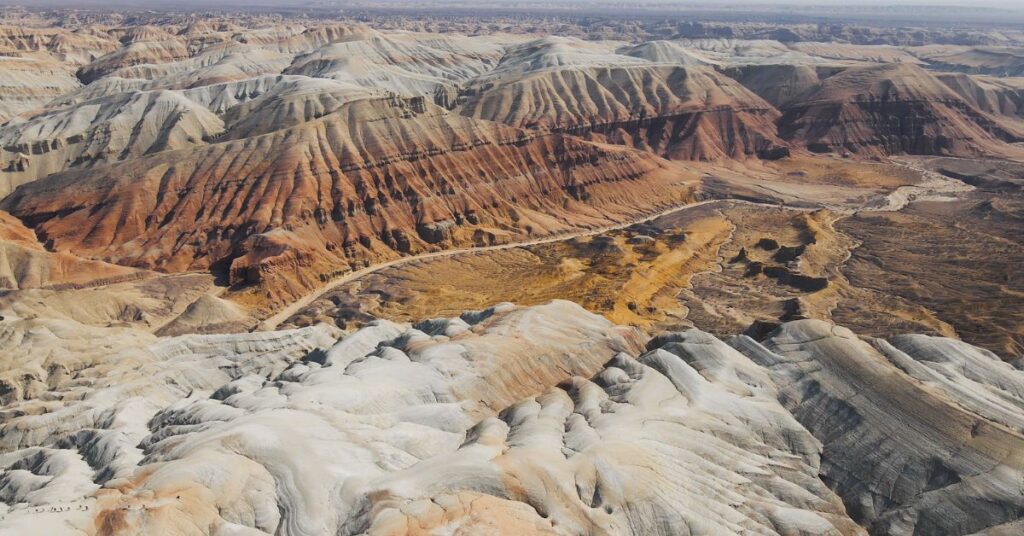
Just on the doorstep of the city of Almaty, this 200,000-hectare national park is what happens when a mountain range decides to go completely unhinged with biodiversity.
The park sweeps from sun-baked lowland steppe all the way up to glacier-capped peaks that top 5,000 meters. Incredibly, you can hike through all four climate zones in a single day. One morning you’re in foothills warm enough for a t-shirt. By afternoon, you’re in alpine tundra pulling on every layer you packed
There are wild Kaufmann’s tulips blooming across the lower slopes every spring? They are the direct ancestors of the tulips in Dutch gardens.
The apple trees growing freely in these valleys. They are believed to be the genetic origin of the world’s common apple. There are ancient Scythian burial mounds — kurgans — scattered along the ridges. Silent proof that humans have considered these mountains sacred for over 2,500 years.
I these reasons are enought for you to put this park among the bucket list places in Kazakastan.
2. Shymbulak
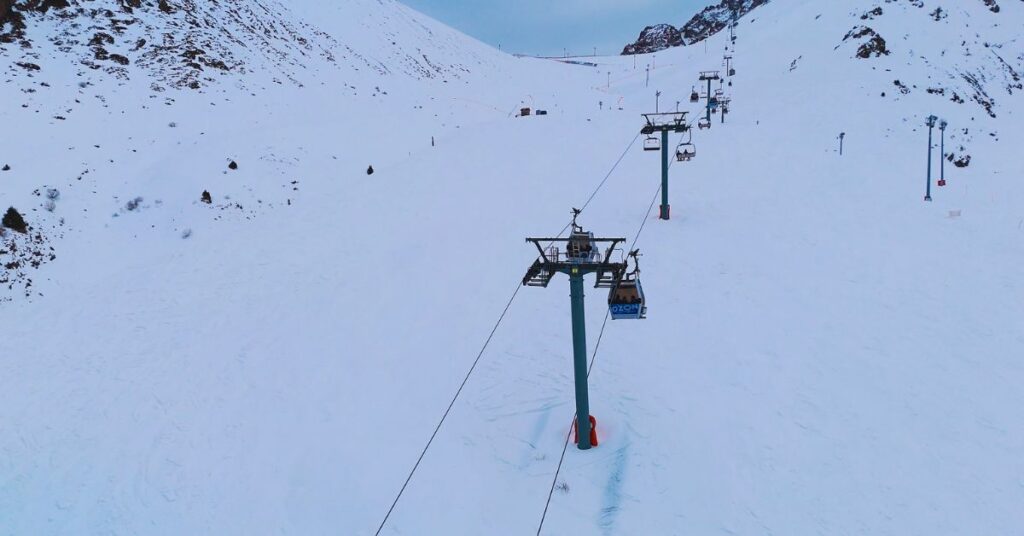
Mention “ski resort” and Kazakhstan in the same sentence and watch people’s faces. The confusion is understandable. But Shymbulak, perched at 2,260 meters in the mountains above Almaty, is legitimately world-class — a facility that has hosted the Winter Asian Games and draws serious alpinists from across the continent.
It is one of the most accessible high-altitude places in Kazakhstan. Getting there is already an experience. You ride a gondola from the famous Medeu skating rink, soaring over deep pine gorges for twenty minutes before the resort comes into view. The highest lift takes you to Talgar Pass at 3,200 meters, where the wind has teeth and Almaty is a distant glittering puzzle far below.
What I love about Shymbulak is the contradiction it holds so comfortably. There’s genuine European alpine polish here — good coffee, quality facilities, the whole thing.
But then you look up and remember you’re in Central Asia, surrounded by peaks named after Kazakh poets and climbers, and the ruggedness of the landscape cuts right through any illusion of civilisation. Winter brings famously dry, fluffy powder. Summer reveals a completely different mountain — trekking routes, paragliders riding thermals, and wildflowers on every slope. It works in every season, which is rare.
3. Big Almaty Lake
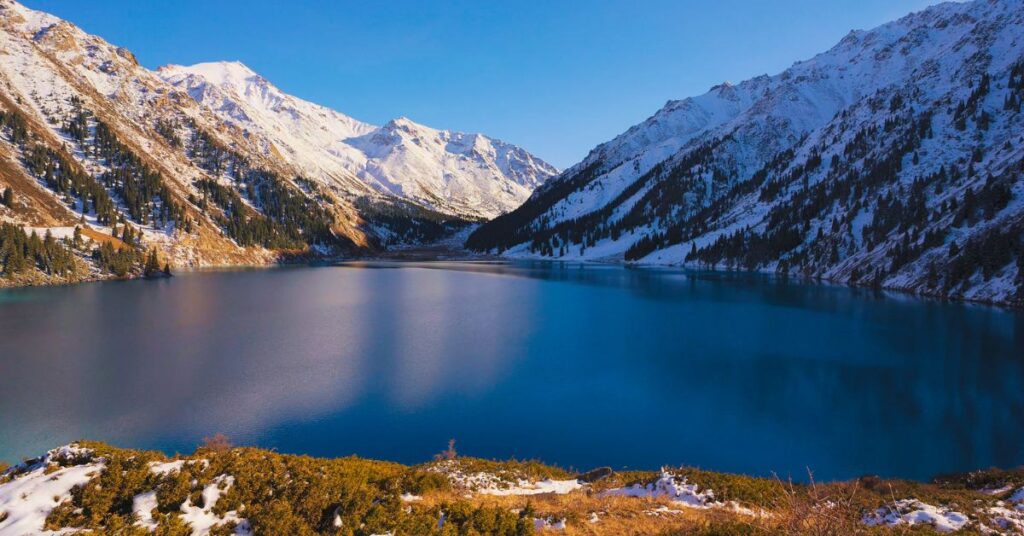
I’ve seen a lot of mountain lakes. Big Almaty Lake, known locally as BAO, is in a different category entirely.
Sitting at 2,511 meters, the lake shifts color depending on the light and season — from a milky lime-green to a deep, almost radioactive turquoise. The color comes from glacial flour, ultra-fine rock particles suspended in the water that scatter sunlight in ways that seem to defy how color is supposed to work. It genuinely looks like someone has applied a filter to real life.
The lake was formed 10,000 years ago when earthquakes dammed the Almaty River. Today it supplies drinking water to the entire city below. Because it supplies drinking water to Almaty, it remains one of the most pristine and protected places in Kazakhstan. That’s why you cannot swim here, cannot walk along the shoreline, and will likely spot border guards on patrol.
The restrictions only add to the sense that you’re looking at something genuinely precious. Three massive peaks frame the water — Tourist, Ozerny, and the 4,110-meter Big Almaty Peak — and on a calm day they reflect perfectly on the surface.
Nearby, a Tien Shan astronomical observatory uses the thin, clear air at this altitude to study deep space.
4. The Assy Plateau
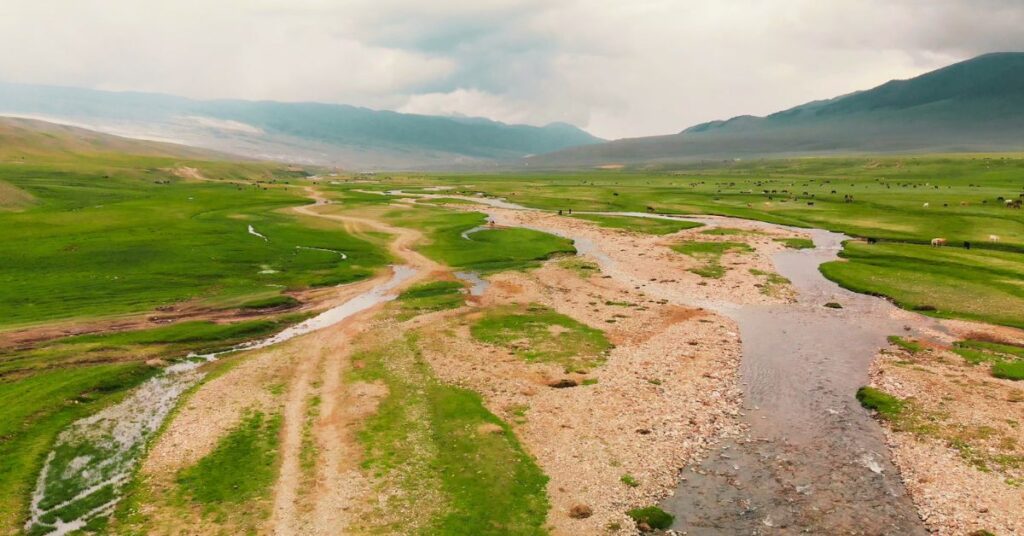
About 100 kilometers east of Almaty, the paved road runs out. That’s when things get interesting.
The Assy Plateau is a Dzhailau — a high-altitude summer pasture at 2,800 meters that has been used by nomadic peoples for five thousand years without meaningful interruption.
When you crest the final ridge and the valley opens up in front of you — forty kilometers of rolling green grassland between two mountain ranges, horses moving freely, yurts dotting the landscape.
What strikes me about Assy is that modernity hasn’t erased the nomadic tradition here; it’s just been stitched into it. Those yurts have solar panels. The herders have satellite dishes. There are ancient burial mounds sitting in the shadow of a silver-domed observatory. The old and the new coexist without apparent tension, which says something profound about Kazakh cultural identity.
Come for the landscape. Stay for the night sky. Assy has some of the darkest skies on Earth, and on a clear night the stars are so dense and low they feel almost dangerous. If you want to see the stars, this is among the few places in Kazakhstan offer skies this dark and dense.
5. Tamgaly-Tas
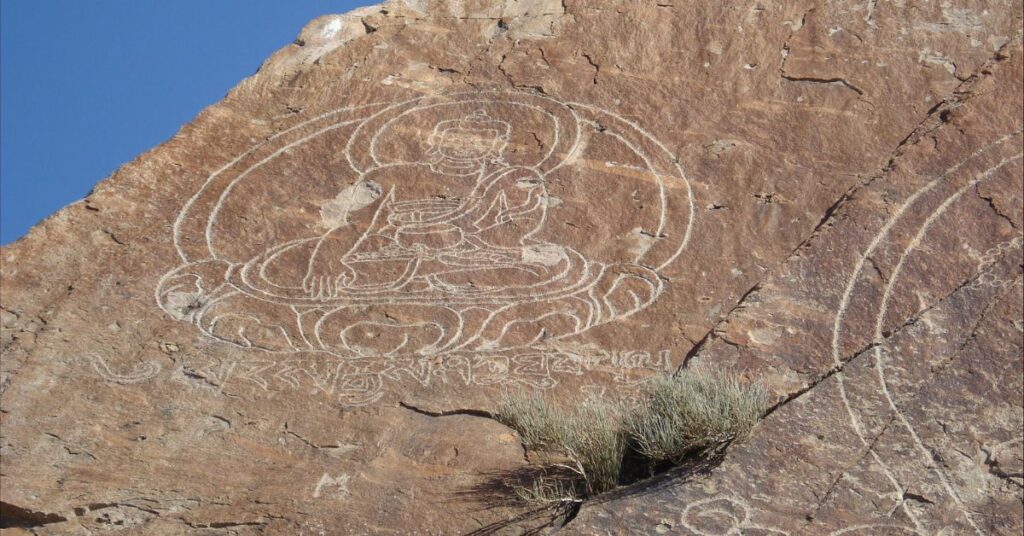
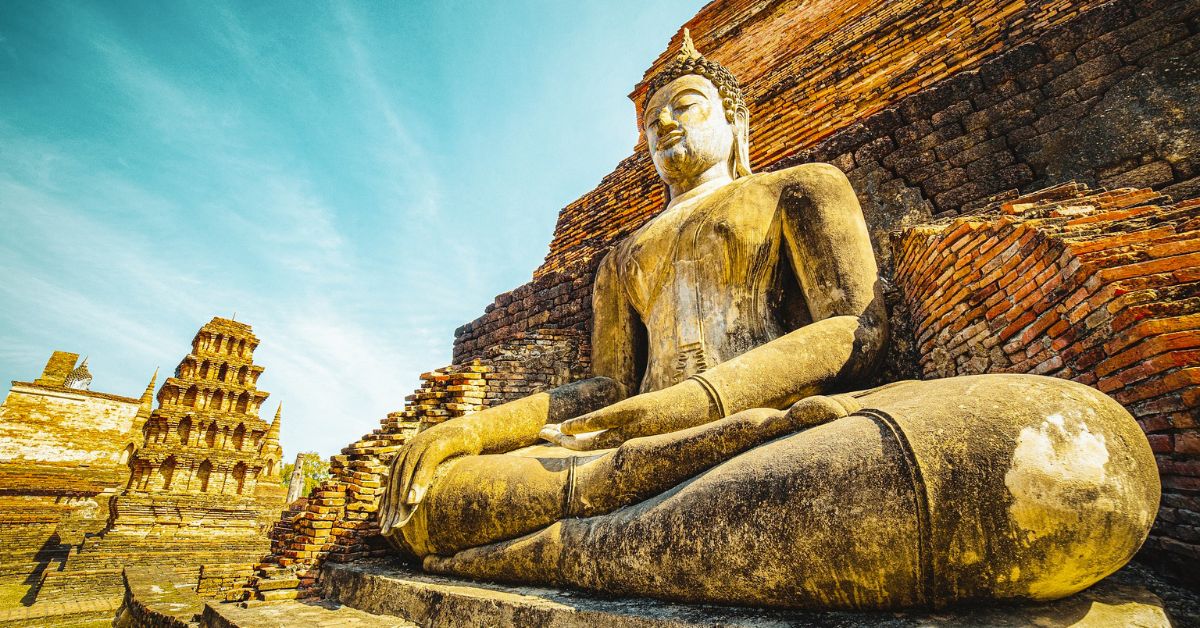
Along the banks of the Ili River, carved into red sandstone cliffs, are enormous 17th-century images of Buddha and Bodhisattvas. In a country whose population is predominantly Muslim. Created by Oirat monks traveling the Silk Road. It is a spiritual crossroads and one of the most historically significant places in Kazakhstan
Tamgaly-Tas — “The Written Rocks” — is one of those places that quietly humbles you. Layered into the same site are Bronze Age petroglyphs of sun-headed deities and hunting scenes going back over 3,000 years. Different civilizations, different faiths, different centuries, all drawn to the same stretch of red cliff above the same blue river. It has been a place of power and pilgrimage for animists, Buddhists, and nomads alike.
The surrounding landscape is stark and dramatic. Red sandstone against deep blue water — and the whole place is suffused with a stillness that feels earned rather than accidental. Tamgaly-Tas is a reminder that Kazakhstan has always been a crossroads, not a backwater. This land sat at the centre of the ancient world.
6. Charyn Canyon : The Grand Canyon’s Underrated Sibling
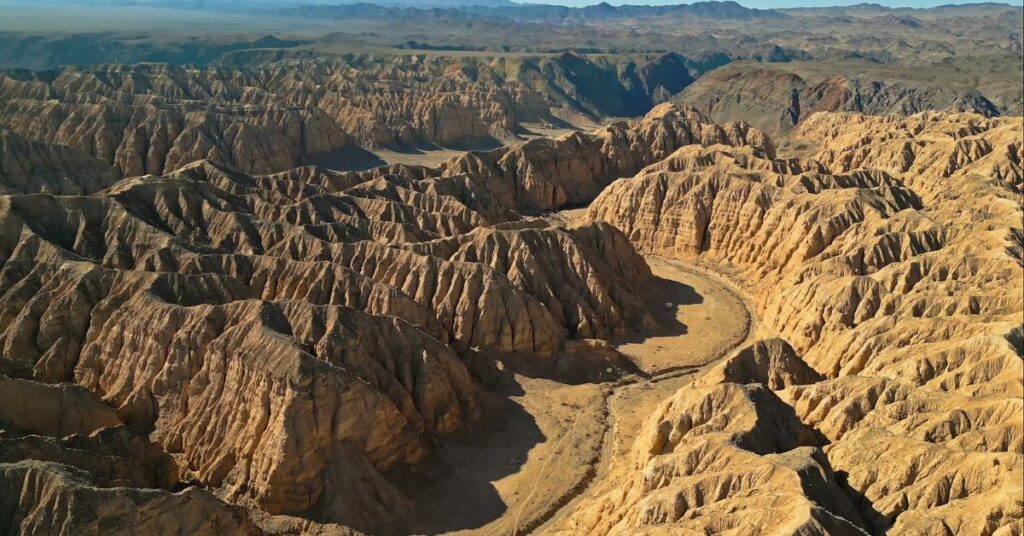
Two hundred kilometers east of Almaty, the earth cracks open.
Charyn Canyon is 154 kilometers long and the product of 12 million years of erosion. Its most famous section, the Valley of Castles, is exactly what it sounds like — red sandstone sculpted by the Charyn River and centuries of wind into towers, bastions, and fortress walls that glow deep crimson at sunset. Walking down into it, the walls close in and the temperature rises and you genuinely feel the weight of geologic time pressing on you from every side. It is one of the most photogenic places in Kazakhstan, especially at dawn when the iron-rich red walls begin to glow.
At the very bottom, something extraordinary survives: the Sogdian Ash Grove, a stand of trees that are living fossils from the Pliocene epoch, specimens that outlasted the Ice Age and exist in only one other location on the planet. They’ve made their home in a lush, cool oasis at the bottom of a desert canyon, which feels like the most defiant possible way to exist.
A practical note: summer temperatures inside the canyon can exceed 45°C. Go at dawn or dusk. The light at those hours, hitting the iron-rich red walls, is worth setting an alarm for.
7. Kolsai Lakes
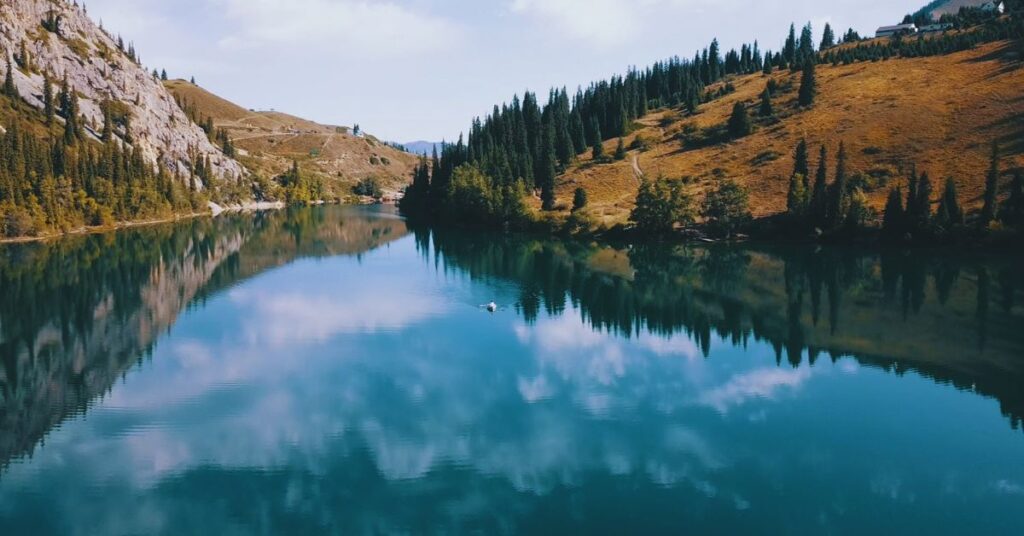
Deep in the Kungei Alatau mountains, the Kolsai Lakes are stacked at three different altitudes — 1,800, 2,200, and nearly 3,000 meters — each one more remote and dramatic than the last. For those seeking alpine tranquility, these are the essential places in Kazakhstan to visit.
The first lake is a deep emerald bowl ringed by towering Tien Shan spruce. The second requires an 8-kilometer hike through pine-scented forest and is the largest of the three, a glassy surface reflecting the snow-capped peaks along the Kyrgyz border. The third sits near the tree line, small and icy and very nearly alone.
The water never rises above 10°C, even at the height of summer, and in the early morning the whole valley fills with mist that gives it the quality of a place that might disappear if you look away. Local families in the village of Saty offer guesthouses and home-cooked meals. Horseback riding is the traditional way to move between the lakes. This is not glamping. This is the real thing.
8. Kaindy Lake
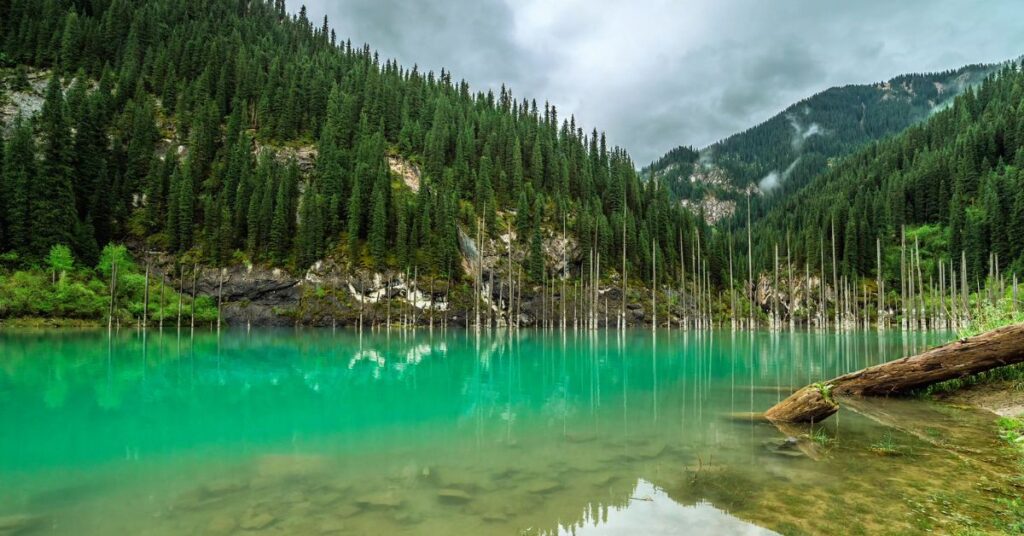
If I had to choose one image to represent everything strange and beautiful about Kazakhstan, it might be this: a turquoise lake at 2,000 meters, with the white trunks of dead spruce trees rising from the water like the masts of a sunken fleet. It is one of the most surreal places in Kazakhstan, offering a haunting beauty that looks like a frozen Atlantis.
In 1911, a 7.7-magnitude earthquake triggered a landslide that dammed a mountain gorge and created Kaindy Lake. The rising water flooded the valley so rapidly that it submerged an entire forest before the trees could fall.
Because the water remains frigid, it perfectly preserves the branches and needles of those trees more than a century later. Ice divers now swim through this underwater forest, frequently—and accurately—comparing the scene to a frozen Atlantis.
The approach to Kaindy is rough — river crossings, steep muddy tracks, a high-clearance 4×4 is not optional. But you arrive to a place of eerie, complete quiet, where the only movement is the light shifting across those white masts. It is one of the most genuinely singular things I have ever seen in photographs, and I imagine it is even more so in person.
9. Altyn-Emel National Park
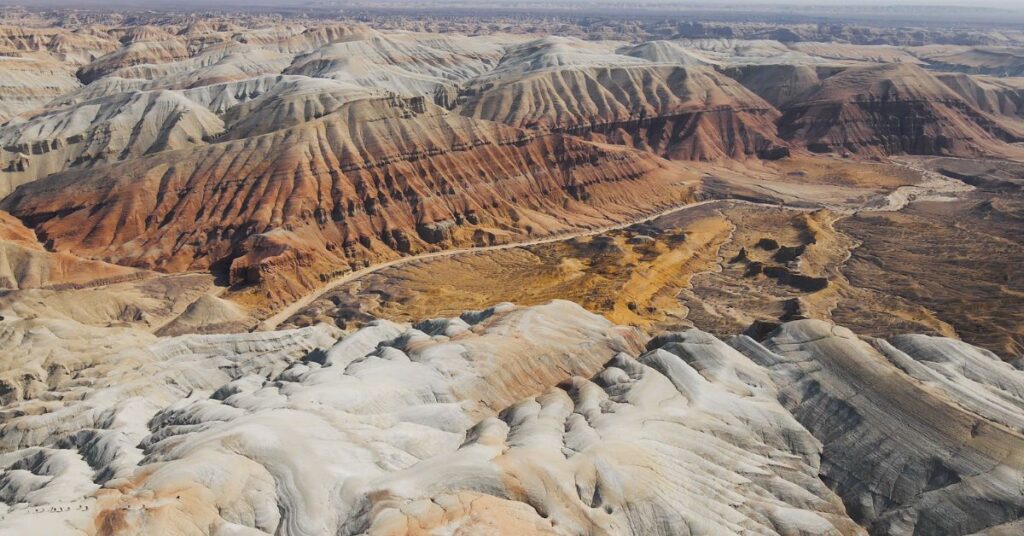
Altyn-Emel is 520,000 hectares of geological improbability, and it saves two of its best tricks for last.
The first is the Singing Dune.
It is a 150-meter-tall sand mountain that, when the wind hits it correctly and the sand is dry, emits a low, resonant hum. Not a whisper. A genuine, organ-like frequency that can be heard from miles away, caused by millions of sand grains vibrating as they slide down the face. There is nothing quite like it anywhere else on Earth.
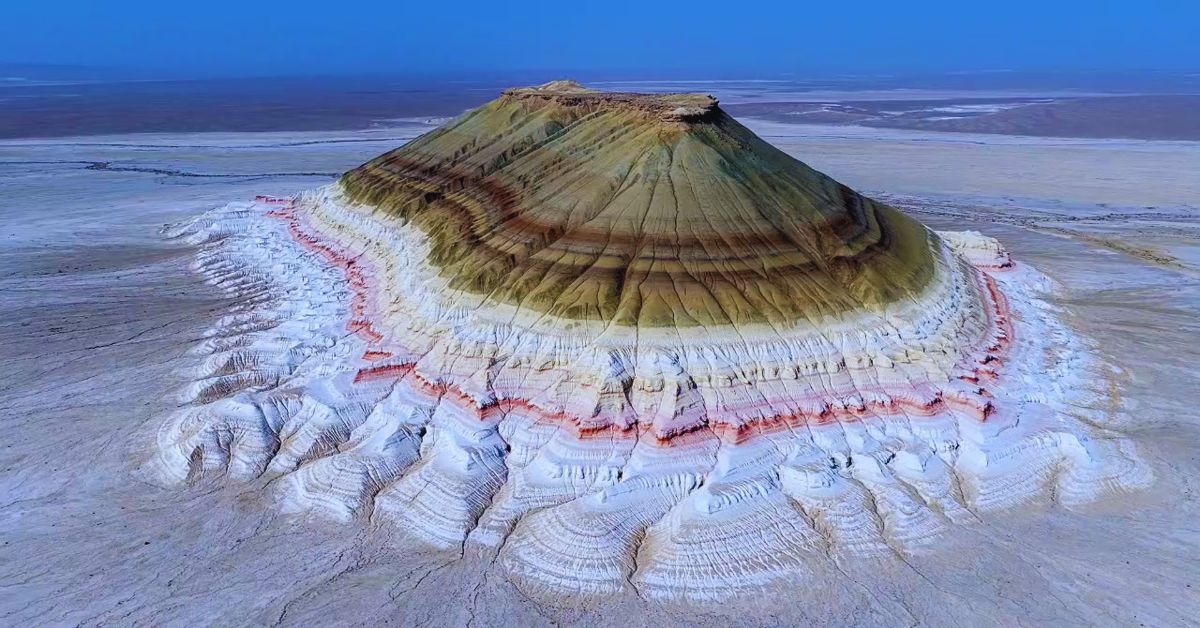
The second is the Aktau Mountains, or “White Mountains” — multi-colored clay hills striped in white, red, and orange that record 30 million years of geological history in their layers. Paleontologists have dug ancient rhinos, crocodiles, and turtles out of these hills. The park also contains 2,500-year-old burial mounds of Saka kings and a solitary willow tree that is 700 years old and so large it takes eight people linking hands to encircle it.
Altyn-Emel is a journey through 400 million years of the planet’s biography. That is not an exaggeration.
10. Aksu-Zhabagly Nature Reserve
This is Kazakhstan’s oldest nature reserve and a UNESCO-protected biosphere that has been left essentially undisturbed for a century. It remains one of the most untouched places in Kazakhstan, where Himalayan brown bears and snow leopards still roam. It sits in the western Tien Shan mountains, and in spring it turns red with Greig’s tulips — the wild ancestors of every cultivated tulip variety ever bred.
The Aksu River, whose name means “White Water,” has carved a canyon over 500 meters deep into the limestone plateau. This is one of the few places on Earth where Himalayan brown bear and Siberian ibex share habitat, and snow leopards patrol the high meadows above the tree line. Jurassic fossils emerge from the rock layers with regularity. There are no roads inside the reserve, only horse trails led by local rangers who know every ridge and river.
This is ecotourism as it should be — genuinely wild, genuinely off-grid, genuinely transformative.
11. Kyzylkum Desert
To understand Kazakhstan’s soul, you have to cross the Kyzylkum — the “Red Sands” — the 15th-largest desert on Earth, a vast ocean of orange and red dunes that stretches across three countries.
Camel caravans have been crossing this desert for centuries, threading the needle between the Syr Darya and Amu Darya rivers that sustained the great Silk Road civilizations. Today, nomadic herders still raise Bactrian camels here, following wells that have been in use for generations. In summer, temperatures push past 50°C. In spring, the entire desert briefly erupts in wildflowers. At night, the stars are extraordinary.
Beneath the sand, incidentally, sit some of the world’s largest deposits of gold and uranium. Even the desert here contains multitudes.
12. Ustyurt Plateau and the Caspian Sea
The far west of Kazakhstan requires a certain kind of traveler — someone comfortable with the phrase “300 kilometers from the nearest city” and genuinely meaning it.
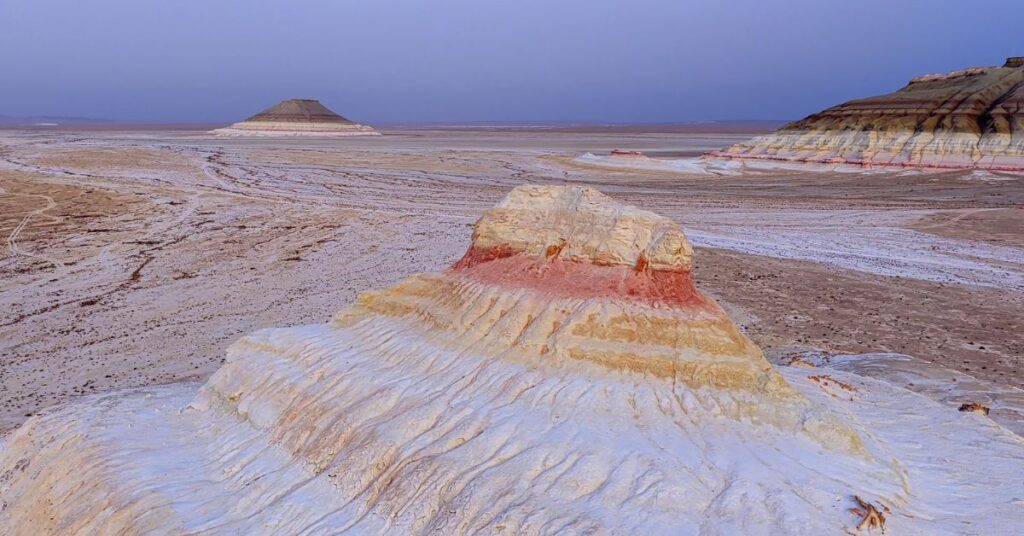
The Ustyurt Plateau was once the floor of the ancient Tethys Ocean. You can still find shark teeth and fossilized shells in the limestone cliffs. It looks, with only slight exaggeration, like the surface of the moon. Within it, the Boszhira Valley is the most alien landscape I have encountered in any photograph — a colossal white chalk basin flanked by two enormous limestone towers called the Fangs, glowing pink and gold at sunrise and sunset, surrounded by absolute silence.
There are no roads, no infrastructure. There was us, the wind, and 400 million years of geological history carved in white rock.
At the plateau’s western edge, the land drops to the Caspian Sea — the world’s largest inland body of water — where the contrast between white cliffs and deep blue water is one of the most striking views in all of Eurasia.
13. The Aral Sea
Not everything in Kazakhstan is a celebration. The Aral Sea deserves to be seen and reckoned with.
In the 1960s, this was the fourth-largest lake on Earth. Soviet-era irrigation projects diverted the rivers feeding it, and over the following decades the sea simply vanished, leaving behind a toxic desert called the Aralkum. Today, the old fishing port of Aralsk sits 60 kilometers from the nearest water. The “Ship Graveyard” — rusted trawlers sitting motionless in dust where a sea used to be — is one of the most powerful images of human-caused environmental catastrophe anywhere on the planet.
There is a cautious note of hope: the Kok-Aral Dam has helped the North Aral Sea begin, slowly, to recover. Fish have returned. But the scale of what was lost is staggering, and the landscape around it has a haunting, desolate beauty that stops you in your tracks. Visit not for the scenery, but for the reminder.
14. Burabay National Park
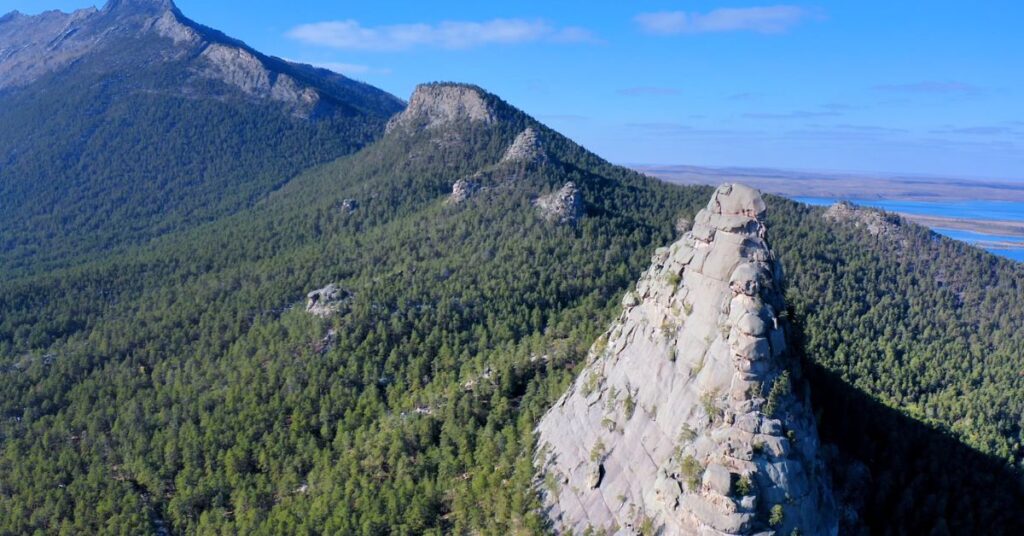
Burabay National Park rises out of the flat northern steppe like something placed there deliberately, as if someone reached into a bag and scattered mountains and lakes across the plains. Local legend says exactly that. The park has 14 major lakes, pine forests that scent the air for miles, and granite formations carved by the northern wind into shapes that the Kazakh people have named — turtles, sphinxes, sleeping warriors, old women. Every stone has a story.
The air here has a reputation for healing. Sanatoriums and spas have been drawing visitors for over a century. In summer it is a hiker’s paradise. In winter the lakes freeze into vast skating rinks and the forest turns white and still. It is warmer and more welcoming than anywhere else we’ve traveled in this country, and it is the perfect place to let a journey this enormous finally settle.
So, Should You Go?
Kazakhstan is a country of secrets, but it is not a country of barriers. The secrets are simply waiting for people willing to look past the unfamiliar name, the blank space on the mental map, the assumption that there is nothing there worth finding.
There is everything worth finding. Landscapes, the history, the people whose culture has survived nomadically across some of the harshest terrain on Earth for millennia, and who will welcome you into it with remarkable openness.
The nomadic road never truly ends. It just changes shape. Kazakhstan is out there, vast and unhurried, waiting for travelers who are ready to go somewhere genuinely new.